Clean Fabric Car Seats Without Damaging the Upholstery
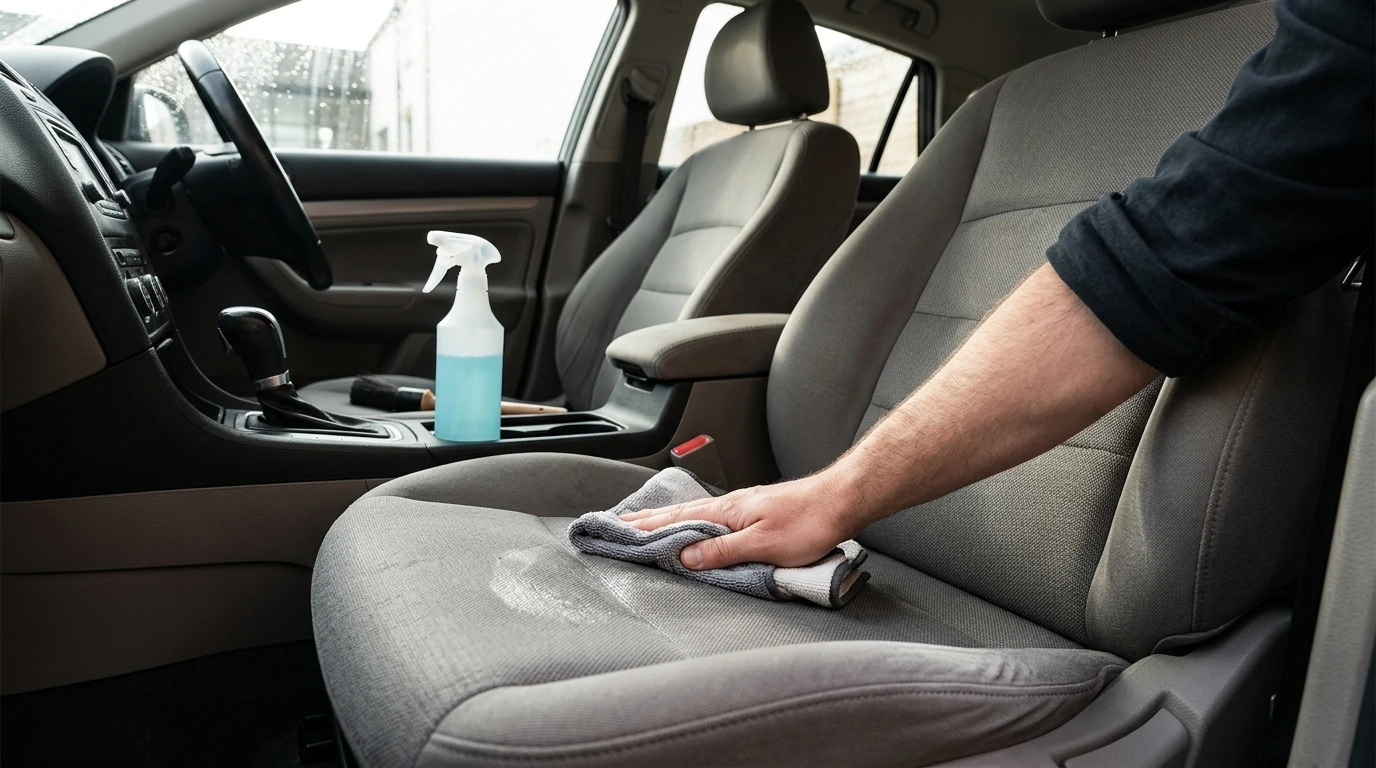
What’s the best way to clean fabric seats?
The best approach is to vacuum first, spot-test a mild cleaner, then blot the fabric with a lightly damp cloth. Use as little liquid as possible: soaking the seat can push dirt deeper into the cushion and leave it damp for too long.
1. Check the care instructions and vacuum
Look in your owner’s manual for cleaning guidance, especially if the seats have special coatings or built-in heating. Remove loose items, then vacuum the seat seams, creases, and surface with an upholstery attachment. A soft brush can help loosen dry dirt without roughing up the fabric.
2. Test a cleaner in a hidden spot
Use an upholstery cleaner made for automotive fabric, or mix a small amount of mild soap with water. Apply a little to an inconspicuous area and wait for it to dry. Check for color transfer, fading, or texture changes before cleaning the visible parts of the seat.
3. Blot instead of scrubbing
Spray the cleaner onto a microfiber cloth rather than directly onto the seat. Work in small sections, gently blotting or making light strokes from the outside of a mark toward its center. Avoid hard scrubbing, which can spread a stain or damage the fibers. Use a separate cloth lightly dampened with clean water to lift away soap residue.
4. Let the seat dry completely
Press a dry towel against the fabric to absorb extra moisture, then leave the doors or windows open in a well-ventilated area until the seat is fully dry. Don’t sit on it while it’s damp. If a stain remains, repeat the gentle treatment rather than adding more cleaner or saturating the cushion.
For more stain-removal and odor-control guidance, see the car seat cleaning guide and checklist.
FAQ
How do you get a coffee stain out of a car seat?
Blot fresh coffee with a clean, dry cloth, working from the outside of the stain inward. Then dab with a cloth lightly moistened with a fabric-safe upholstery cleaner, blot with clean water to remove residue, and let the seat dry fully.















Leave a comment