HEPA 13 Air Purifier for Large Rooms: 2105 ft² Guide
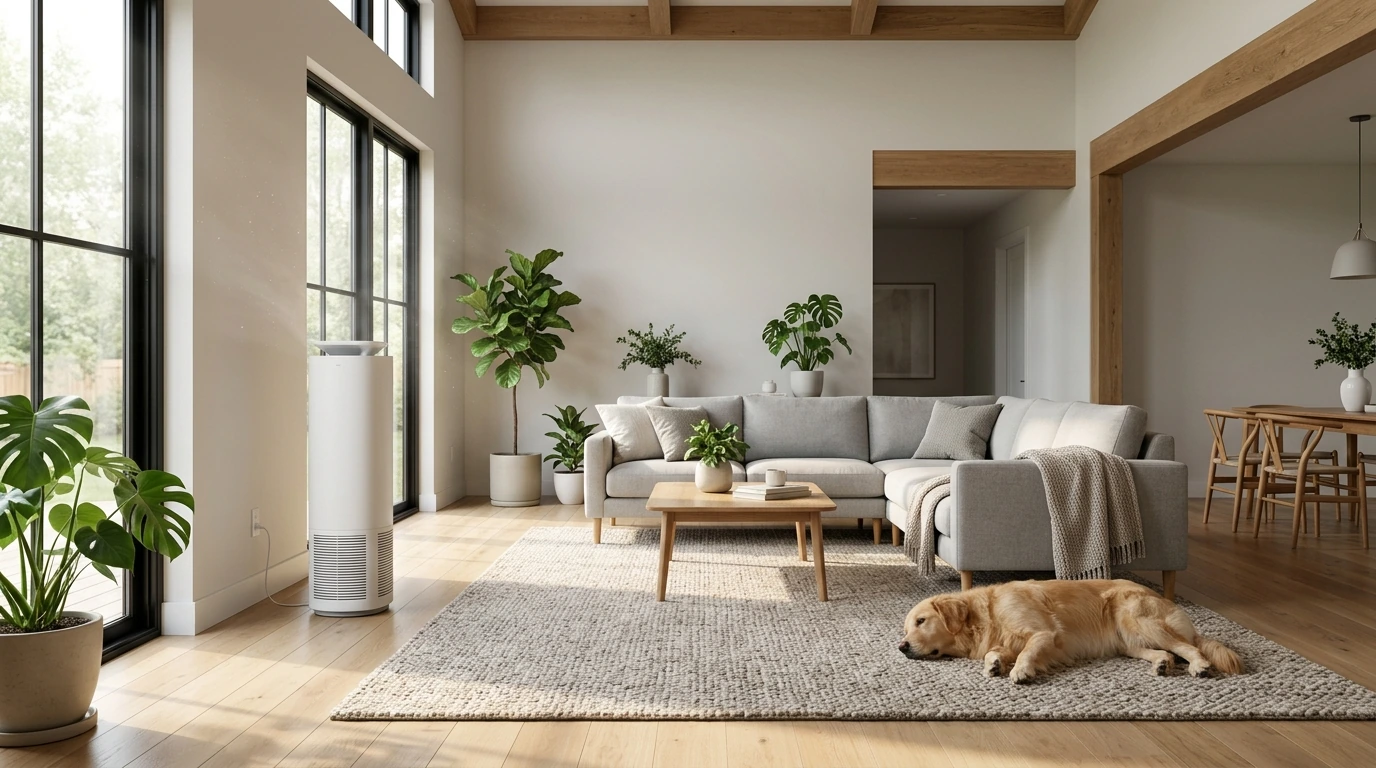
Air Purifier for Home Large Rooms Up to 2105ft² with HEPA 13 Filters: What to Expect and How to Use It Well
Large, open-concept spaces can trap odors, smoke, pet dander, and fine dust in the same air volume that HVAC systems keep recirculating. A high-capacity air purifier designed for big rooms can help reduce airborne particles when it’s sized correctly, placed smartly, and maintained on schedule—especially when paired with a true HEPA-grade filter.
What a large-room air purifier can improve
A properly sized purifier for a big room is built to move a lot of air and pass it through filtration media over and over throughout the day. That steady cycling can make a noticeable difference in how the space feels—especially when daily activity keeps particles in motion.
- Helps reduce common airborne particles such as dust, pollen, pet dander, and smoke-related particulate matter.
- Can make bedrooms and living areas feel fresher by continuously cycling and filtering indoor air.
- Supports allergy seasons and pet-heavy homes by capturing particles that settle and re-suspend during daily activity.
- Works best as part of an indoor air routine that also includes ventilation, source control, and regular cleaning.
For background guidance on what air cleaners can and can’t do, the U.S. EPA’s Guide to Air Cleaners in the Home is a helpful reference.
Room size, coverage, and what “up to 2105ft²” means in practice
Square-foot coverage claims are best treated like a starting point, not a guarantee. Most maximum ratings assume a specific air-change rate (how many times the unit can filter the room’s air per hour), plus a “standard” ceiling height and relatively open airflow. In real homes, tall ceilings, open doorways, and furniture layouts can stretch the effective volume and alter circulation.
- Maximum coverage ratings are typically based on a specific air-change rate; real performance varies with ceiling height, open doorways, and airflow obstacles.
- Large rooms often need higher fan speeds to keep particle levels low during cooking, cleaning, or high occupancy.
- Open floor plans behave like multiple zones; placement and airflow paths matter as much as the headline square footage.
- If the purifier is used in a smaller room, it can often run at lower speeds while maintaining strong air turnover.
Quick sizing and usage guide for large spaces
| Room situation | Practical setup | Typical fan-speed approach |
|---|---|---|
| Single large room (wide open, minimal partitions) | Place near the center of activity with clear intake/exhaust space | Medium most of the day; high during cooking/cleaning |
| Open-concept (living + kitchen + dining) | Position to intercept the busiest source area (often near kitchen boundary) | Auto/medium baseline; high during peak source events |
| Large bedroom | Place 3–6 ft from the bed with unobstructed airflow | Low/medium overnight; medium during daytime |
| Multiple connected rooms with doors open | Choose a central location or consider multi-unit zoning | Medium/high to compensate for additional volume |
If you like to compare performance metrics across room air cleaners, AHAM’s CADR overview explains how clean-air delivery testing is commonly discussed.
HEPA 13 filtration: what it captures and what it doesn’t
HEPA 13 filters are designed for fine-particle capture, which is exactly what tends to aggravate allergies and make indoor air feel “dusty” or smoky. Many large-room purifiers use a multi-stage approach so larger debris doesn’t overwhelm the main filter.
- HEPA-grade filters are designed to capture very fine particles; this includes many allergy triggers and smoke particulates.
- A multi-stage design is common: a pre-filter for hair/lint, a main HEPA filter for fine particles, and often additional media for odor control.
- Filters do not “create fresh air”; they remove particles from the air that passes through the unit.
- Odors and gases require specialized sorbents (such as activated carbon); particle-focused filtration alone may reduce some smell-carrying aerosols but not all gases.
Best placement for faster results in big rooms
Placement is one of the quickest ways to gain (or lose) performance in a large space. The goal is simple: keep airflow unobstructed so the purifier can pull in dirty air and push out cleaned air without short-cycling against walls or furniture.
Noise, energy use, and daily operation
Filter care and replacement timing
When a large-room purifier is especially useful
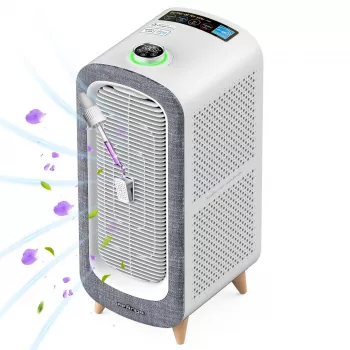
Product option: large-room air purifier up to 2105ft² with HEPA 13
If you’re furnishing a large living room, an open layout, or a shared family space, Air Purifier for Home Large Room Up to 2105ft² with HEPA 13 Filters is built for high-coverage use where smaller units often struggle to keep up.
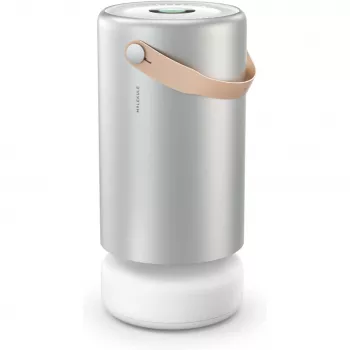
More in-stock picks
FAQ
How often should HEPA filters be replaced in a home air purifier?
Many households replace HEPA filters every 6–12 months, but heavy pet dander, dust, or smoke exposure can shorten that window. Follow the manufacturer’s schedule and watch for indicator lights, reduced airflow, or lingering odors as practical cues.
Will a HEPA air purifier remove odors and cooking smells?
HEPA filtration primarily removes particles, not gases, so it won’t fully eliminate odors on its own. Units with activated carbon or other adsorbent media are better suited for smells, though removing aerosol particles can sometimes reduce the “lingering” effect after cooking.
Where should an air purifier be placed in a large room for best performance?
Place it where air can move freely—away from walls, curtains, and bulky furniture—with enough clearance around the intake and exhaust. In open layouts, a semi-central spot or a position between the source (like the kitchen) and the rest of the room often delivers faster, more even results.










Leave a comment