Belt Check: Make Any Outfit Look Expensive in 60 Seconds
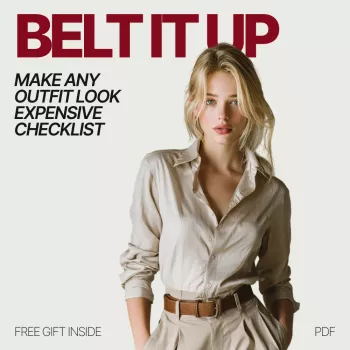
Belt It Up: A Quick Checklist to Make Any Outfit Look Expensive
A belt is one of the fastest ways to add structure, polish, and intention to an outfit. The difference between “thrown on” and “put together” usually comes down to small, repeatable decisions: fit, proportion, color, finish, and placement. Use the quick checks below to make everyday looks read elevated—without changing your whole closet. For more guidance, see What Should I Wear? The Ultimate Guide to Workplace Dress Codes.
The fast “belt check” before leaving the house
- Match the formality: sleek leather and clean edges for tailored outfits; suede, woven, or textured finishes for relaxed looks.
- Pick one focal point: statement buckle or statement outfit—avoid loud prints and bold hardware competing in the same area.
- Align your metals: buckle tone should make sense with jewelry, watch, and bag hardware for a cohesive finish.
- Fix the tail and keeper: tuck excess neatly; long belt tails look accidental unless styled intentionally.
- Mirror scan for symmetry: centered buckle, straight belt line, no twists, no bunching under the belt.
If you like having a ready-to-use reminder on your phone, the printable Belt It Up: Make Any Outfit Look Expensive Checklist – A Quick Guide to Elevate Your Style is an easy grab-and-go reference when you’re getting dressed or packing. For further reading, see 11 Instant Style Tricks That Dress Up Any Outfit – AARP.
Proportion rules that instantly look tailored
- Match belt width to the garment: slim belts for dresses and high-waist silhouettes; medium widths for jeans and trousers; wide belts sparingly for outerwear or dramatic waist definition.
- Belt the narrowest point for an elevated silhouette: often the true waist or slightly high waist, especially with midi skirts and tailored pants.
- Use the “thirds” idea: raising the belt can lengthen legs; lowering it slightly can lengthen the torso—choose based on the outfit’s lines.
- Avoid bulky fabric under tight belts: smooth the layer beneath, or switch to a softer, wider belt for knits and coats.
Quick belt-to-outfit pairing guide
| Outfit base | Best belt choice | Why it reads expensive | Common mistake to avoid |
|---|---|---|---|
| Blazer + trousers | Medium-width smooth leather, minimal buckle | Clean lines mimic tailored styling | Oversized logo buckle competing with lapels |
| Jeans + tucked tee | Medium leather or suede, classic buckle | Adds structure and intentionality | Mismatched metals with jewelry/watch |
| Slip dress | Slim belt (leather or satin-like finish) | Defines shape without adding bulk | Wide belt that wrinkles fabric |
| Oversized sweater | Soft wide belt or tie belt over a base layer | Creates a controlled silhouette | Cinching thick knits too tightly |
| Trench/coat | Self-belt tied neatly or structured wide belt | Polished waist definition | Loose, uneven knots or drooping tails |
Color and material choices that look high-end
- Prioritize deep neutrals: black, chocolate, espresso, camel, and oxblood tend to look richer than bright, flat color blocks.
- Choose materials that hold their shape: smooth leather, structured faux leather, or quality suede. Skip finishes that peel or have a loud plastic shine.
- Go tonal or go intentional: tonal matching (belt close to pants/shoes color) looks sleek; deliberate contrast (camel belt on all-black) looks styled.
- Keep stitching subtle for dressier outfits: contrast stitching leans casual and can break the “polished” illusion fast.
- When unsure, match belt to shoes or bag: then make sure hardware finishes don’t clash.
Want a quick “luxury cue” refresher? Publications like The Business of Fashion often discuss how small styling signals change perceived quality—belts are one of the easiest signals to control.
Buckle and hardware: the smallest detail that changes everything
- Choose one metal family per look: gold-toned, silver-toned, gunmetal, or mixed (mixed only when repeated intentionally elsewhere).
- Minimal reads luxe: small prong buckles, sleek plaques, or understated western buckles in brushed metal often look more premium than oversized, shiny hardware.
- Avoid flimsy buckles: thin, bendy hardware can make even a good outfit look cheaper.
- For dressier outfits, keep buckles low-profile: they sit flatter under blazers and coats and don’t distort fabric.
If a watch is part of your daily uniform, treat it like jewelry and coordinate it with your buckle. A warm buckle pairs naturally with a leather watch strap, while silver hardware pairs cleanly with steel. Two easy options to build around are a premium leather strap for Apple Watch or a milanese magnetic stainless steel band for Apple Watch.
Where to belt: placements that elevate everyday outfits
- High-waist belting: best for trousers, paperbag waists, and midi skirts to create a longer leg line and a crisp finish.
- Mid-waist belting over dresses: defines shape while keeping the silhouette soft; especially effective with shirt dresses.
- Over-outerwear belting: wide belts over blazers, trenches, and long cardigans look intentional—like styling, not just “keeping warm.”
- Low-slung belts: keep minimal and deliberate; works best with straight-leg denim and simple tops.
- Try 10-second swaps: same outfit, different belt placement—keep the version with the cleanest lines and least bunching.
Outfit upgrades that pair perfectly with belting
Checklist: 60-second routine for an expensive-looking finish
A simple checklist to keep on hand
FAQ
Should a belt match shoes or bag?
Matching is optional; coordinating tone and formality matters more. A sleek belt looks best with similarly polished shoes or a structured bag, and keeping hardware metals consistent is the quickest way to look pulled together.
What belt width looks most expensive?
Proportion looks most expensive: slim belts for dresses and high-waist outfits, and medium-width belts for trousers and denim. Wide belts can look luxe over outerwear, but they’re easiest to overdo if the outfit fabric is soft or bulky.
How tight should a belt be to look polished?
Snug is ideal—secure without pulling fabric or creating waistband puckering. If the belt tail is excessively long or you’re between holes, sizing down or choosing a belt with smaller hole spacing usually looks cleaner.









Leave a comment