50,000 mAh Power Bank on International Flights: Allowed?
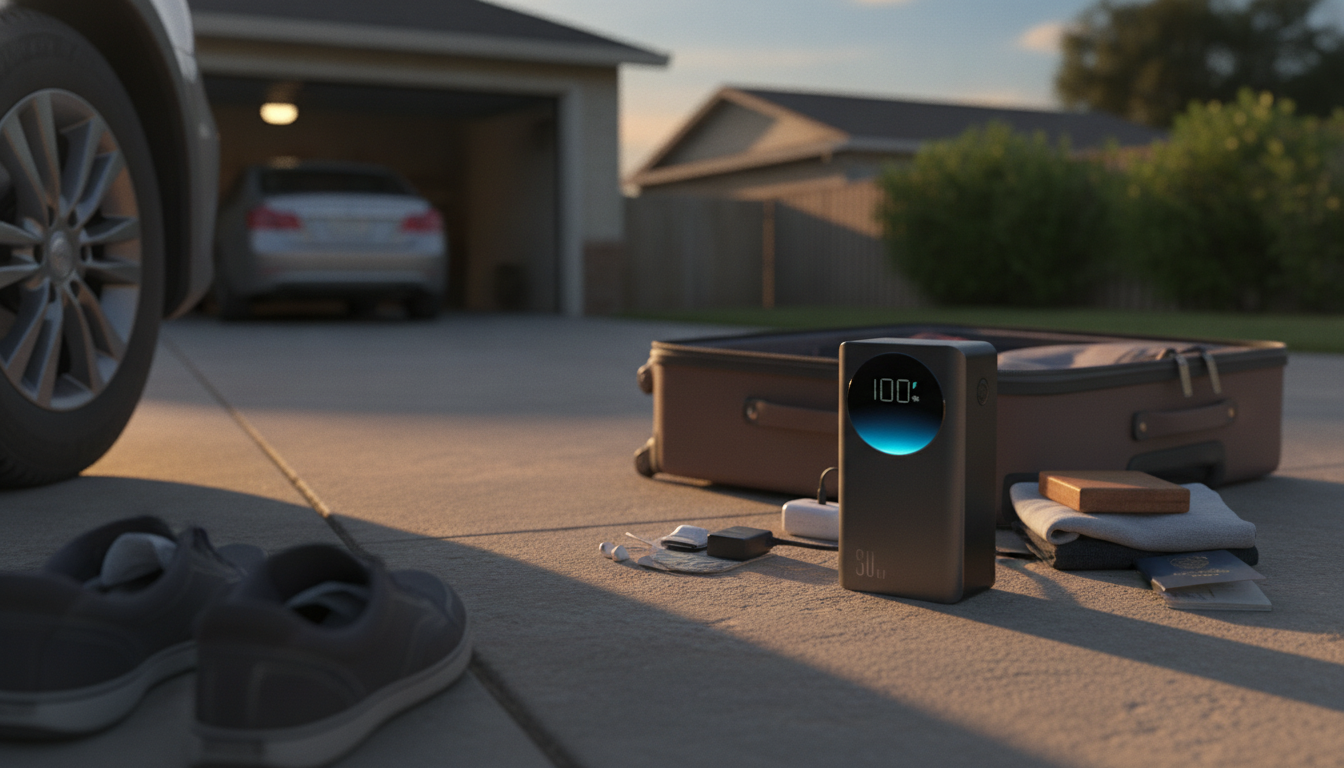
Can I bring an 50,000 mAh power bank on plane International?
Answer
Usually, a 50,000 mAh power bank is too large to bring on an international flight because most airlines follow IATA-style lithium battery rules that limit power banks by watt-hours (Wh), not mAh. Power banks up to 100 Wh are typically allowed in carry-on luggage, 100–160 Wh may be allowed only with airline approval, and anything over 160 Wh is generally not permitted on passenger aircraft.
A “50,000 mAh” rating is commonly measured at the bank’s internal battery voltage (often around 3.7V). A quick estimate is:
50,000 mAh = 50 Ah. 50 Ah × 3.7V ≈ 185 Wh.
At roughly 185 Wh, many 50,000 mAh models exceed the 160 Wh cap, so they’re likely prohibited even if you keep them in your carry-on. If your power bank lists Wh on the label and it’s under the limit, you may be fine; if it doesn’t list Wh, some airlines may treat it as not acceptable because they can’t verify compliance.
Also note these common requirements:
- Power banks must go in carry-on baggage (not checked luggage).
- Terminals should be protected (use a case or cover ports) to prevent short circuits.
- Some airlines restrict using or charging power banks onboard, even if you can carry them.
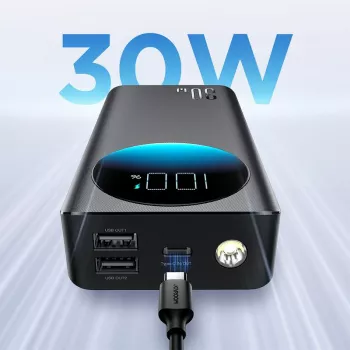
If you’re shopping for a travel-friendly option, it helps to balance capacity (Wh) with charging speed (watts). For a practical breakdown of charging power—like what “30W” really means for phones and tablets—see this guide: 30W power bank for Apple devices: what 30W really means.
For 50,000 mAh Power Bank on International Flights: Allowed?, the best answer depends on fit, material, care instructions, and how the product will be used day to day.
FAQ
How do I calculate watt-hours (Wh) from mAh on a power bank?
Convert mAh to Ah (divide by 1,000), then multiply by the battery voltage (often 3.7V): Wh = (mAh/1000) × V. If the label lists Wh, use that number since it’s what airlines rely on.













Leave a comment