30W Power Bank for Apple: Real Fast-Charge Benefits
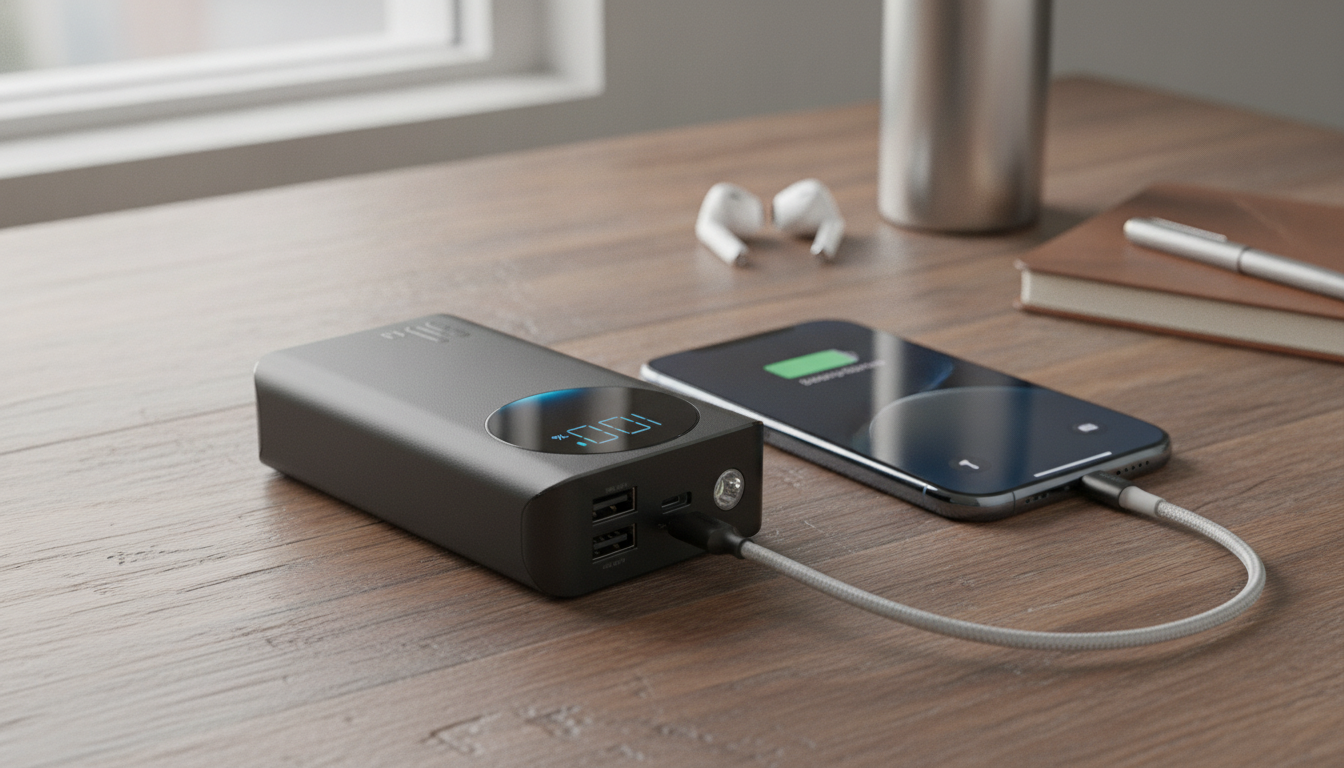
30W Portable Power Bank Charging for Apple Devices: What “30W” Really Gets You
A 30W portable power bank is a sweet spot for Apple users who want faster top-ups without carrying a brick. When your iPhone is down to a low battery on a commute, or your iPad needs a quick boost between classes, 30W output can provide noticeably better performance than older 5W–12W charging. The key is matching the right cable and charging protocol (typically USB-C Power Delivery) so your device can negotiate the best safe speed.
What 30W charging means for Apple devices
“30W” refers to the maximum power a bank can deliver through a compatible port. That doesn’t mean your iPhone or iPad will always draw 30W—Apple devices control their own intake based on battery level, temperature, and what they’re doing.
- Faster than basic banks: A 30W bank is built to supply higher output than entry-level models, especially over USB-C, which helps compatible iPhones and iPads charge more quickly with the right cable.
- Best gains at low battery: iPhones that support fast charging tend to pull more power when the battery is low, then taper off as it fills—so you’ll feel the difference most from roughly 20% to 80%.
- More practical for iPads: Tablets often benefit from higher wattage because they have larger batteries. A 30W bank can be a reliable level for iPad top-ups during travel, meetings, or long study sessions.
- Real speed varies: Battery temperature, background usage, cable quality, and protocol support (like USB-C PD) all affect charging time.
Compatibility checklist (iPhone, iPad, AirPods, and cables)
Before buying or packing a power bank for Apple gear, confirm three things: the port type, the cable, and the charging protocol.
- Connector match: Many modern power banks output via USB-C. iPhone 15 uses USB-C, while many earlier iPhones use Lightning—so you’ll need the correct cable (USB-C to USB-C or USB-C to Lightning).
- Protocol support: For “fast charge” behavior, USB-C Power Delivery (PD) is the common standard Apple devices use with USB-C charging accessories.
- Multiple devices: If you charge an iPhone and AirPods at the same time, some banks share power across ports and may reduce max wattage per device.
- Cable quality matters: A poor cable can limit charging speed, run hot, or disconnect. Use certified or reputable cables and replace damaged ones.
- Fit and access: If a bank uses built-in connectors or close-fitting alignment, thick cases and camera bumps can affect seating and stability.
Quick compatibility guide for common Apple charging setups
| Apple device | Recommended cable from power bank | What to confirm for best results |
|---|---|---|
| iPhone 15 series | USB-C to USB-C | USB-C PD support; cable rated for fast charging |
| iPhone 14/13/12 and earlier | USB-C to Lightning | PD + MFi-certified or reputable Lightning cable |
| iPad with USB-C | USB-C to USB-C | 30W output helps; device may cap input based on model |
| AirPods (Lightning case) | USB-C to Lightning | Stable low-power charging; avoid loose connectors |
| AirPods (USB-C case) | USB-C to USB-C | Reliable USB-C port and cable fit |
Capacity, size, and real-world recharge expectations
Capacity is often marketed in mAh, but mAh alone doesn’t tell the whole story. Power banks store energy in cells at a lower internal voltage, then convert it to 5V/9V/12V output. That conversion creates heat and losses.
- Think in watt-hours (Wh): Wh is a better measure for comparing usable energy across products. Usable capacity is always lower than the label due to conversion and safety buffers.
- Portable banks are built for top-ups: A compact travel-ready bank is typically meant to keep a phone alive all day, not replace a wall charger for a week.
- Usage changes results: Charging while running navigation, streaming video, or using hotspot reduces how many “full recharges” you’ll get because the phone is consuming power as it charges.
- iPads need more energy: If tablet charging is your main goal, expect fewer total charges compared to iPhone-only use.
Safety features that matter for Apple gear
Fast charging is convenient, but it raises the stakes on safety and heat management. A well-designed bank should include multiple protections so power stays stable even when cables move or devices renegotiate charging.
How to use a 30W power bank efficiently
Product options in stock
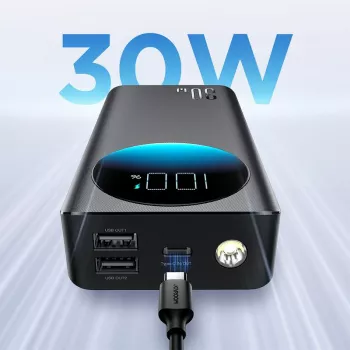
- 30W Portable Power Bank for Apple Devices ($43.51) — a travel-friendly option designed for fast, convenient charging for compatible Apple devices. Check the product page for port types, included cable details, and device notes.
- Corduroy Fabric Strap for Apple Watch ($13.01) — a comfortable everyday strap option for Apple Watch wear, great for commuting and casual use.
- milanese-magnetic-stainless-steel-band-for-apple-watch ($23.51) — a magnetic stainless option that’s quick to adjust and easy to dress up or down.
Travel notes: carrying power banks on planes
- How to estimate Wh: A simple estimate is Wh = (mAh × V) ÷ 1000. Many banks use a nominal cell voltage around 3.7V, but the correct value is the labeled Wh on the device when available.
- Check the label: A clearly printed Wh rating makes screening and airline compliance easier.
- Confirm rules before flying: Policies can differ by airline and country. Reference official guidance from the FAA PackSafe lithium battery page, the TSA batteries guidance, and IATA lithium battery guidance.
FAQ
Can I bring an 50,000 mAh power bank on plane International?
Maybe, but it depends on the power bank’s watt-hour (Wh) rating and your airline’s limits. Many 50,000 mAh models can exceed common carry-on thresholds, so check the Wh value printed on the bank and confirm the airline and local aviation authority rules; power banks are typically carry-on only.













Leave a comment