Quiet Power Dressing in Neutrals: Minimalist Outfit Formulas
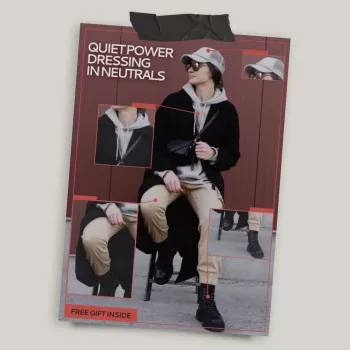
Quiet Power Dressing in Neutrals: Minimalist Outfits That Never Look Boring
Neutrals can read as effortless and expensive—or flat and forgettable. The difference is intention: a clear palette, strong proportions, and a few repeatable outfit formulas that make getting dressed feel simple without looking basic. Quiet power dressing is about presence without noise: clean lines, controlled contrast, and details that signal care (fit, fabric, finishing). Once you build a neutral “system,” you’ll spend less time deciding and more time feeling aligned with your schedule and values.
Quiet power dressing: the neutral advantage
Quiet power dressing in neutrals is less “cute outfit” and more “capable and deliberate.” When you keep color restrained, your silhouette, fabric quality, and finishing become the statement—and that’s exactly why neutrals feel commanding.
- Use restraint as a style tool: fewer colors, better fit, higher-impact proportions.
- Prioritize credibility details: sharp collars, structured shoulders, neat hems, polished shoes.
- Build repeatable confidence: outfits that work for meetings, travel, and everyday errands with small switches.
- Think in layers and contrast, not “statement pieces”: neutrals shine when styling is the statement.
If you want a step-by-step plan you can keep on your phone, our team put it into Quiet Power Dressing in Neutrals (eBook guide).
Choose a neutral palette that flatters (and keeps mixing easy)
Your goal isn’t owning every neutral—it’s choosing a small set that always looks intentional together. Start with two core neutrals that dominate your wardrobe, then add one supporting neutral for warmth or depth.
- Pick 2 core neutrals for most outfits (black + cream, navy + ivory, chocolate + beige, charcoal + soft white).
- Add 1 supporting neutral (camel, taupe, stone, espresso) to prevent your looks from feeling one-note.
- Match undertones on purpose: cool neutrals feel sleek; warm neutrals feel soft and luxe.
- Control contrast: high-contrast reads bold; low-contrast reads serene; mid-contrast reads professional.
- Create “anchor pieces” in your core neutral (coat, blazer, trouser, boot) so the wardrobe holds together.
| Vibe | Core neutrals | Supporting neutral | Best for |
|---|---|---|---|
| Sharp & modern | Black + soft white | Charcoal | Presentations, evening, city looks |
| Soft & elevated | Cream + beige | Camel | Weekend polish, travel capsules |
| Rich & grounded | Chocolate + taupe | Espresso | Autumn/winter outfits, luxe minimalism |
| Professional & calm | Navy + ivory | Stone | Workwear, smart casual, interviews |
| Cool & quiet | Charcoal + grey | Silver-taupe | Minimal wardrobes, monochrome dressing |
When you’re unsure about undertone and contrast, it helps to learn how color is categorized and communicated across industries—Pantone’s color work is a solid reference point: Pantone Color Institute.
Make neutrals interesting: texture, structure, and proportion
In a neutral wardrobe, texture replaces print and structure replaces “sparkle.” That’s why the same beige sweater can look either sleepy or expensive depending on what you pair it with.
- Texture is your “pattern”: mix matte + sheen (cotton poplin with satin, wool with leather, denim with cashmere).
- Structure adds authority: blazers, crisp shirting, tailored trousers, straight skirts, clean outerwear.
- Use volume intentionally: if one piece is wide, keep the other more fitted (or do a clean tuck).
- Build depth with tonal layering: three shades of the same neutral reads cohesive rather than plain.
- Polish the finish: steam/press, remove lint, and keep footwear clean—neutrals show details.
For broader context on why “quiet luxury” and polished minimalism keep cycling back into relevance, industry coverage like The Business of Fashion is a useful lens.
Outfit formulas for intentional neutral dressing (save these)
When you have formulas, you don’t have to “get creative” on busy mornings. You just swap fabrics, shoes, and one layer based on your day.
- Formula 1 (work-ready): tailored trouser + fitted knit + blazer + sleek belt + pointed shoe.
- Formula 2 (quiet luxury casual): straight-leg denim + crisp button-down + trench/coat + refined flat or loafer.
- Formula 3 (modern monochrome): one base shade head-to-toe + one darker layer (coat or blazer) for framing.
- Formula 4 (minimalist contrast): light column (top + trouser) + dark outer layer + matching dark shoe.
- Formula 5 (dress that means business): midi dress + structured jacket + tall boot (or slingback) + minimal jewelry.
The fastest upgrade is the “third piece” rule: add one structured layer (blazer, coat, vest) so neutrals look finished rather than just “dressed.”
Build a timeless wardrobe: the neutral capsule that actually gets worn
Capsules fail when they’re built around fantasy. We recommend starting with what you wear weekly and tightening the fit standards so new purchases actually integrate.
If you want a fashion-industry perspective on craftsmanship and design standards, CFDA is a credible starting point.
Accessories that add quiet authority (without clutter)
A watch band is an easy place to add texture while staying neutral. For a softer, tactile finish, try our Corduroy Fabric Strap for Apple Watch. For a sleeker, sharper edge that reads “boardroom-ready,” our team likes the Milanese Magnetic Stainless Steel Band for Apple Watch. If you prefer a classic, understated option that blends into most capsules, we also stock a Premium Leather Strap for Apple Watch.
When neutrals feel boring: fast fixes that don’t require a new wardrobe
FAQ
How do neutrals look expensive instead of plain?
Focus on fit, fabric weight, and finishing: pressed hems, clean shoes, and pieces that hold their shape. Add tonal depth with 2–3 shades of the same neutral, then finish with one structured layer and a single intentional accessory.
How many neutrals should be in a minimalist wardrobe?
Start with 2 core neutrals plus 1 supporting neutral. That mix keeps everything easy to combine while still giving you enough contrast for different settings and seasons.
What’s the easiest neutral outfit formula for work?
Do tailored trouser + fitted knit (or crisp shirt) + blazer + sleek shoe. Keep the palette to two shades and repeat one accessory—like a belt or watch—for a consistent signature.









Leave a comment