Wood Dining Table for 6–8 People: Size, Spacing & Care
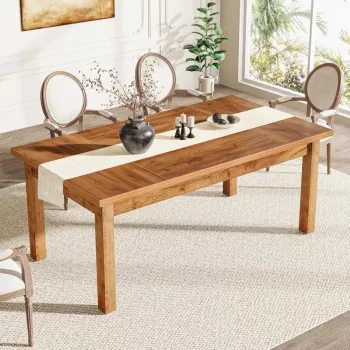
Large Wood Dining Table for 6–8 People: The Centerpiece That Makes Room for Everyone
A good wood dining table does more than fill a space—it sets the rhythm for everyday meals, weekend hosting, homework sessions, and long conversations that run past dessert. If your goal is a table that comfortably seats 6–8 people, feels grounded, and stays welcoming year after year, the right size, shape, and care plan matter as much as the look. Our team put together the practical checkpoints to help you measure with confidence, seat people without crowding, and keep a wood surface looking its best.
Why a wood dining table works for real homes
Wood brings warmth to open-plan spaces and smaller dining areas alike. It balances metal, stone, and upholstered pieces without feeling cold or overly formal, so your dining zone feels “lived-in” in the best way.
It’s also easy to live with day to day: a wood top wipes down quickly, handles routine use well, and plays nicely with everything from minimalist dining chairs to mixed vintage seating. And when you’re feeding a group, a larger table makes gatherings feel relaxed—no squeezing plates together or asking someone to balance a drink in their lap.
For family life, the payoff is huge: a spacious table doubles as a practical surface for projects, board games, folding laundry, and buffet-style serving setups when you’re hosting.
Sizing that feels comfortable: seats 6–8 without crowding
Before you fall in love with a finish, map out comfort. Most “too small” dining setups aren’t about taste—they’re about elbow room and chair clearance.
- Plan for elbow room: A comfortable place setting typically needs about 24 inches (61 cm) of width per person along the table edge.
- Leave clear walking space: Aim for roughly 36 inches (91 cm) between the table edge and the nearest wall or large furniture so chairs can slide in and out easily.
- If the room is tight: Consider slimmer dining chairs or a bench on one side to reduce the push-pull space needed behind chairs.
- Make 6–8 the “normal” range: A table designed to seat 6–8 is ideal for everyday family meals (6) and casual hosting (up to 8) without juggling add-ons.
Quick layout guide for a table that seats 6–8
| What to measure | Comfortable target | Why it matters |
|---|---|---|
| Width per person along a side | 24 in (61 cm) per seat | Helps plates and elbows fit without bumping |
| Clearance from table edge to wall/furniture | 36 in (91 cm) minimum | Makes it easy to pull out chairs and walk behind |
| Clearance in busy traffic paths | 42–48 in (107–122 cm) if possible | Prevents bottlenecks when serving or passing through |
| Center space for serving dishes | At least 12–18 in (30–46 cm) free | Keeps shared plates and decor from crowding settings |
For deeper clearance guidance used by designers, you can compare your plan to the NKBA planning guidelines.
Making 6–8 seating feel natural (not squeezed)
Seating “capacity” and seating “comfort” aren’t always the same. The difference comes down to chair shape, entry/exit space, and what you keep in the center.
- For 6 everyday seats: Three chairs on each long side keeps things balanced and easy to serve.
- For 8 when hosting: Add seats at the ends and keep side chairs a bit slimmer so getting in and out still feels smooth.
- Mixing chair styles works: With wood, mixing finishes can look intentional fast—just keep chair heights and seat depths compatible so everyone stays comfortable.
- If kids are part of the routine: Leave one spot flexible for a booster or high chair by avoiding a bulky armchair on that side.
Choosing the right look: grain, tone, and room balance
Wood is doing more than providing a surface—it’s anchoring your dining area visually. Tone and grain are the two big levers.
Everyday care that keeps a wood top looking its best
If you’re curious about why wood reacts the way it does (seasonal humidity, movement, and moisture), the USDA Forest Service Wood Handbook is a reliable reference.
Set it up for how people actually gather
A ready pick for 6–8: Large Wood Dining Table
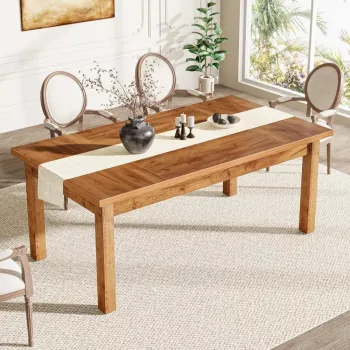
If you’re ready for a straightforward, welcoming centerpiece, our team recommends starting here: Large Wood Dining Table for 6-8 People. It’s built for everyday seating with room to host, so you can handle weeknight routines and weekend gatherings without turning dinner into a shuffle.
More from our store
FAQ
How much space is needed around a dining table for 6–8 people?
Plan for about 36 inches minimum from the table edge to a wall or large furniture so chairs can pull out and people can pass behind. In high-traffic paths (like between the kitchen and dining area), 42–48 inches is even more comfortable and helps prevent bottlenecks.
How do 8 people fit comfortably at one dining table?
The easiest layout is three seats along each long side and one seat at each end, as long as the table proportions allow it. Slimmer chairs (and avoiding bulky arms) make it easier for guests to slide in and out, and keeping the center clear prevents place settings from feeling cramped.
What’s the best way to protect a wood dining table from heat and spills?
Use trivets for hot dishes, coasters for drinks, and placemats or a table pad during heavy use. Wipe spills quickly with a slightly damp cloth and dry right after, and avoid harsh cleaners or abrasive scrubbers that can dull the finish.











Leave a comment