Pilates Digital Guide for Strength, Mobility & Ease
Move With Ease Through Pilates: A Digital Guide for Strength, Mobility, and Daily Movement Confidence
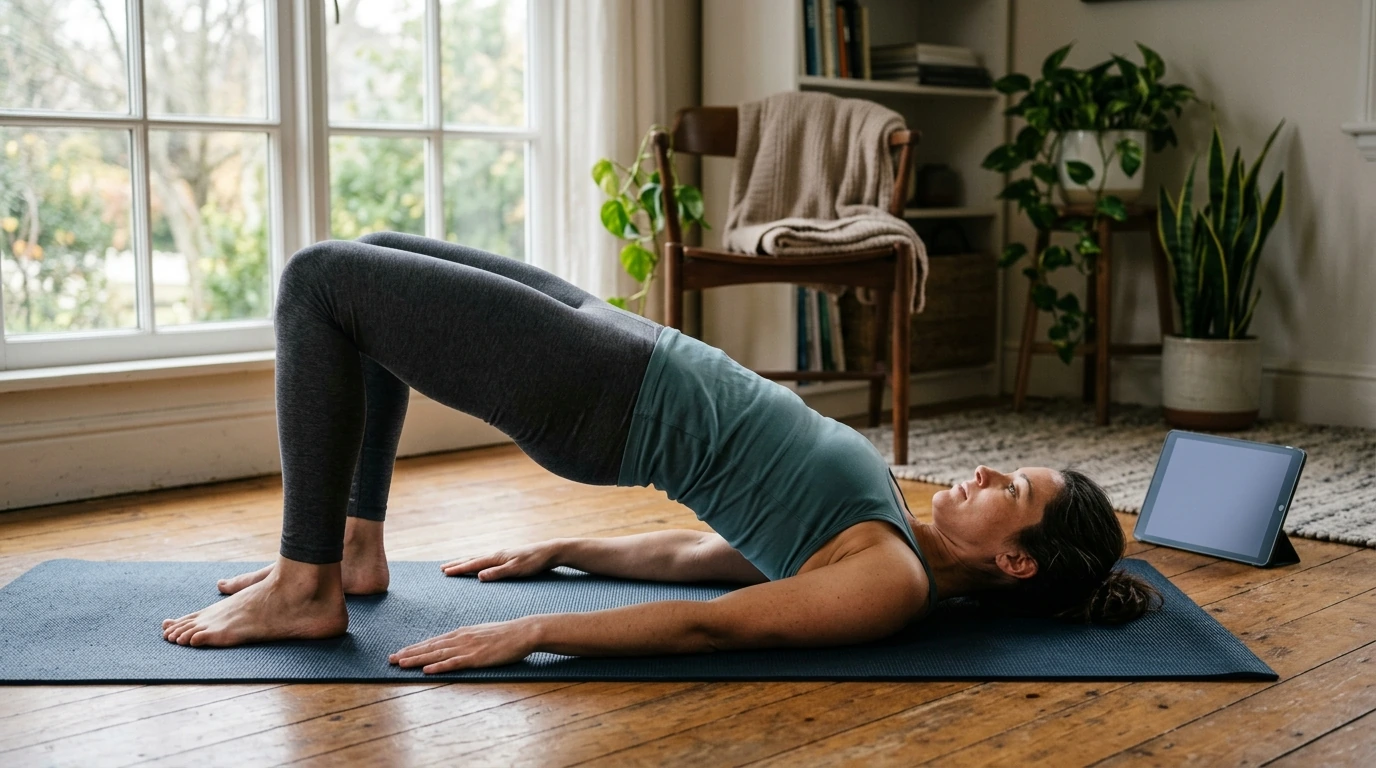
Movement feels different when your body is both strong and supple. Our digital Pilates guide is built to make that difference practical—helping you build strength, improve mobility, and develop body awareness that carries into everyday tasks like sitting, standing, lifting, walking, and getting back up again. Use it as a repeatable routine library: pick what fits today, press start, and move with steadiness and control.
What this digital Pilates guide helps unlock (beyond a workout)
Pilates works best when it becomes more than “exercise time.” Our team designed this guide to support how you move the other 23 hours of the day.
- Strength that supports posture: you’ll focus on controlled tension rather than rushed reps, so strength shows up when you’re carrying groceries or sitting tall at your desk.
- Mobility that feels usable: your joints move through comfortable ranges with stability underneath—so flexibility doesn’t feel “loose,” it feels supported.
- Better movement choices throughout the day: improved alignment, breathing coordination, and core engagement can translate to smoother daily movement.
- Confidence from clarity: a simple structure makes it easier to know what to do, even on low-motivation days.
- A home-friendly approach: you can practice consistently without needing a studio schedule.
Who it’s for (and how it fits different starting points)
- Beginners who want a guided path: start with foundational patterns and repeat them until they feel natural.
- Desk-bound bodies: counterbalance long sitting with spinal mobility, hip opening, and core control.
- Active people who feel tight or uneven: build control at end-range and smooth out movement quality.
- Anyone rebuilding consistency: shorter sessions can be repeated frequently for noticeable changes in comfort and coordination.
- People who want low-impact training: emphasize precision and breath without high joint impact.
A simple weekly rhythm: strength + mobility + confidence
If you want results you can feel in daily life, consistency wins. Aim for 3–5 sessions per week, and rotate what you emphasize so you build capacity without feeling beat up.
- Aim for 3–5 sessions per week: shorter, consistent sessions often outperform occasional long workouts.
- Alternate emphasis across days: core and glutes one day, spinal mobility and hips the next, full-body integration after.
- Keep a “minimum effective dose” option: a 10–15 minute routine that’s easy to start, even on busy days.
- Use breath as the anchor: steady breathing supports control, reduces unnecessary tension, and improves body awareness.
- Progress by refining quality: increase range, slow the tempo, or add holds before adding more volume.
Weekly practice menu (mix-and-match guide)
| Day | Focus | Session length | What to prioritize |
|---|---|---|---|
| Mon | Core control + posture | 15–25 min | Slow reps, neutral spine awareness |
| Tue | Hips + glutes mobility/strength | 10–20 min | Hip extension control, balanced sides |
| Wed | Spine mobility + breath | 10–20 min | Segmented movement, gentle rotation |
| Thu | Full-body integration | 20–30 min | Smooth transitions, steady tempo |
| Fri | Recovery flow | 10–15 min | Ease of movement, low tension |
| Sat/Sun | Optional repeat | 10–30 min | Repeat what felt most beneficial |
How to use the guide for real-life movement improvements
The biggest payoff comes when practice connects to everyday “carryover.” Here’s how to make that happen on purpose.
- Pick a daily intention: “tall posture,” “easy hips,” “strong back,” or “steady core” helps you choose the right routine fast.
- Pair practice with a daily trigger: after morning coffee, before a shower, or after work—consistency beats perfect timing.
- Train transitions, not just poses: include moving from floor to standing, rolling patterns, and controlled position changes.
- Notice the carryover moments: stairs, sitting down quietly, reaching overhead, carrying bags—these are the real wins.
- Repeat a short sequence for 1–2 weeks: repetition builds coordination faster than constantly changing routines.
Progression without overwhelm: what to change first
When you’re ready to level up, you don’t need to overhaul everything. Change one variable, keep your form clean, and let that be the progression.
- Slow down: reducing speed increases challenge and improves alignment.
- Increase breath control: match breath to effort and keep a calm rhythm during holds.
- Add range gradually: expand range only if stability stays intact—no pinching, no sharp discomfort.
- Build symmetry: give extra attention to the tighter/weaker side without forcing it to match immediately.
- Track one measurable cue: longer hold, smoother roll-down, steadier pelvis, or less neck tension.
Helpful add-ons for staying consistent
Shop our team’s picks (in stock)
- Move With Ease Through Pilates | Digital Guide to Pilates Exercises for Strength, Mobility & Daily Movement Confidence — a structured, repeatable routine library designed for strength, mobility, and steadier daily movement.
- Corduroy Fabric Strap for Apple Watch — a comfortable option if you like tracking session time and keeping a consistent movement streak.
- milanese-magnetic-stainless-steel-band-for-apple-watch — a secure choice for everyday wear when you want quick adjustability.
Safety notes for confident practice
For additional Pilates basics and benefits, you can also review guidance from NHS and Harvard Health Publishing.
FAQ
How often should Pilates be done to improve strength and mobility?
Plan for 3–5 sessions per week, and prioritize consistency over duration. If you’re busy, a 10–15 minute “minimum effective dose” routine done regularly can still build strength and mobility when you repeat foundational patterns with good form.
Is this guide suitable for beginners who feel stiff or tight?
Yes—this is a solid starting point for stiffness, especially when you begin with foundational routines and keep the range small and controlled. Slowing the tempo and focusing on breath and alignment first helps you feel safer and looser without forcing stretches.
What if there isn’t much time—can results still happen with short sessions?
Short sessions can absolutely work when you do them consistently. Choose one brief sequence and repeat it for 1–2 weeks so your body learns the patterns, coordination improves, and starting feels easy instead of complicated.














Leave a comment