


Picky Eater Help: Calm Mealtimes & Better Habits
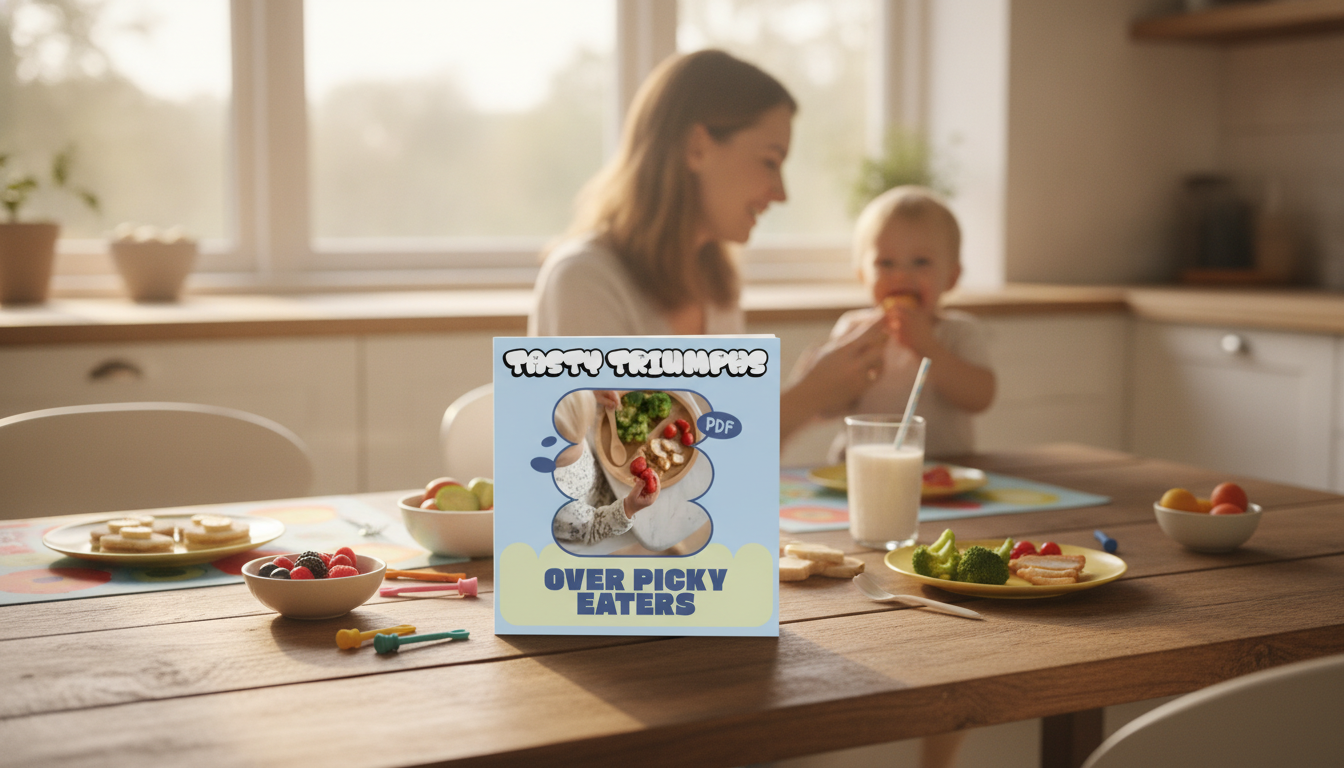
Tasty Triumphs Over Picky Eaters: A Practical eBook for Stress-Free Mealtimes and Healthier Habits
Mealtimes can turn tense when a child refuses familiar foods, reacts strongly to textures, or eats only a short list of favorites. Picky eating is common, but it can still feel exhausting—especially when it affects family routines, nutrition worries, and everyone’s mood at the table. A guide-focused approach can help: practical strategies that reduce power struggles, build comfort with new foods over time, and support steady, realistic progress.
Why picky eating happens (and why it’s not just “being difficult”)
Picky eating usually has a reason, even when it looks like stubbornness. Many kids experience heightened sensitivity to taste, smell, or texture, and unfamiliar foods can feel genuinely “too much.” Others feel anxious about new foods (a common fear-of-the-new response), or they seek control after a long day of being told what to do at school or daycare.
It also helps to know that caution around food can be a normal developmental pattern in early childhood. Progress often looks uneven—one week a child tolerates a new food, the next week they reject it again. That doesn’t mean the approach failed; it often means the child needs more repetition and less pressure.
One of the biggest drivers of escalation is the stress loop: pressure to eat increases refusal, refusal increases pressure, and dinner becomes a battle. If there are red flags such as extreme restriction, weight loss, persistent choking fears, frequent gagging, or strong anxiety around food, it’s a good idea to seek professional support and guidance.
Resetting the mealtime dynamic: calm structure beats pressure
When picky eating is intense, the fastest relief often comes from changing the emotional temperature at the table. A helpful goal shift is moving from “finish your plate” to “practice being around foods.” That small change protects trust and reduces the feeling that mealtime is a test.
Structure also matters. Predictable meal and snack times help hunger cues do their job. If grazing happens all day, a child may arrive at dinner without much appetite, which makes new foods even harder. Many families find it easier to hold boundaries when the routine is consistent: “Next food time is snack,” rather than negotiating bite-by-bite.
To lower anxiety without turning into short-order cooking, serve at least one familiar “safe” food alongside the family meal. The safe food isn’t a bribe; it’s a bridge that helps a child stay regulated and present at the table.
Finally, keep language neutral. Instead of praising big bites or criticizing small ones, describe foods in a non-judgmental way (“crunchy,” “warm,” “sweet,” “salty”) and let the child decide what to do with what’s offered.
Small-step exposure that actually works
For many kids, trying new foods is less about willpower and more about nervous-system comfort. That’s why gradual exposure tends to outperform “just take a bite.” A simple ladder can look like: tolerate it on the plate → touch → smell → lick → tiny bite → bigger bite. Repetition matters more than a single “win.”
Micro-portions are a game-changer. One pea, one thin slice, or a single shred of chicken makes trying feel doable. Pairing new foods with familiar dips, spreads, or formats can also help bridge acceptance—like roasted carrots with a known sauce, or apple slices with a familiar nut/seed butter (as appropriate for age and allergies).
A practical toolkit for stressful moments
When dinner is refused
If a child only eats a few foods
If textures are the issue
When time is short
Quick reference: common challenges and helpful responses
| Situation | What often backfires | Try instead |
|---|---|---|
| Refuses dinner immediately | Arguing, pleading, or offering dessert as leverage | Offer a safe food alongside; keep tone neutral; stick to the next scheduled eating time |
| Only wants one “favorite” meal | Making a separate meal every time | Rotate small variations of the favorite (shape, sauce, side) while keeping one familiar element |
| Gags at new textures | Forcing a bite or saying “it’s fine” | Step back to tolerating/touching; introduce tiny texture shifts gradually; validate discomfort without pressure |
| Eats a few bites then stops | Counting bites or insisting on a clean plate | Respect fullness; focus on routine and balanced options across the day |
| Asks for snacks right after refusing food | Giving unlimited snacks to avoid conflict | Offer water; remind of next planned snack/meal; keep timing predictable |
How the eBook supports progress at home
When emotions run high, it’s hard to remember what to do next. The Tasty Triumphs Over Picky Eaters eBook guide organizes practical strategies into clear, doable steps for everyday family meals, even when time is limited.
For general feeding and nutrition guidance, trusted public health resources can be helpful reference points alongside your family’s plan, including HealthyChildren.org (American Academy of Pediatrics), the CDC Infant and Toddler Nutrition hub, and the NHS tips for fussy eaters.
Getting started this week: a simple plan
More in our shop
FAQ
What is the new book about picky eaters?
It focuses on practical, low-stress strategies to reduce mealtime battles, expand food acceptance gradually, and build healthier routines with step-by-step guidance parents can use at home.
How long does it take for a picky eater to try new foods?
Timelines vary widely, and acceptance often takes many low-pressure exposures. Progress is best measured in small steps—tolerating, touching, smelling, and tasting—rather than expecting an immediate full serving.
When should picky eating be discussed with a pediatrician?
Bring it up if there’s poor growth or weight loss, choking/swallowing concerns, extreme restriction, strong anxiety around food, frequent gagging, or signs of nutritional deficiencies. If you’re worried, a pediatrician can help determine whether extra support is needed.
















Leave a comment