Outdoor Natural Gas Tankless Water Heaters: Sizing & Setup
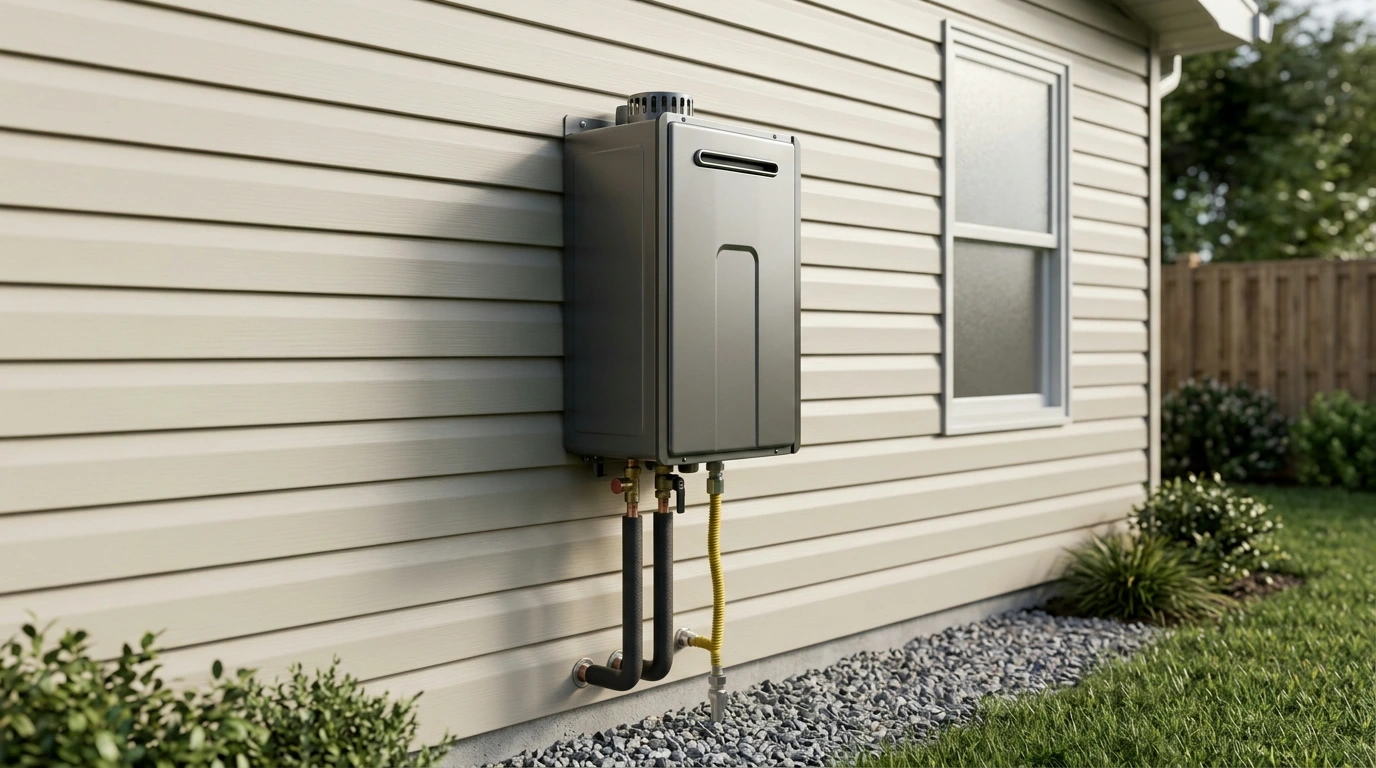
Outdoor Natural Gas Tankless Water Heater: Hot Water on Demand, Built for the Outdoors
An outdoor natural gas tankless water heater is designed to deliver continuous hot water without storing it in a tank—while keeping the unit outside the home to save indoor space and simplify venting. Our team put together this guide to help you decide where outdoor models make the most sense, what to confirm before installation, and how to set expectations for flow, temperature rise, and cold-weather operation.
What an outdoor tankless heater does differently
Unlike a storage tank that keeps dozens of gallons hot around the clock, a tankless system heats water only when you open a hot-water tap. That “on-demand” approach can cut standby losses and better match real household usage patterns.
- Heats water only when a hot-water tap runs, which reduces standby losses associated with storage tanks.
- Mounts outdoors, helping free up indoor utility space and keeping combustion equipment out of living areas.
- Typically uses sealed combustion design appropriate for exterior installation (confirm local code requirements and product documentation before install).
- Works best for households that want long showers back-to-back, frequent appliance use, or consistent hot water without scheduling around a recovery tank.
- Ideal placements include exterior walls near bathrooms/laundry to reduce hot-water wait time and heat loss in long pipe runs.
For background on how demand-type water heaters work and what affects efficiency, the U.S. Department of Energy has a solid overview: Tankless or Demand-Type Water Heaters.
Where outdoor installation shines (and where it doesn’t)
Outdoor tankless setups can be a straightforward win when you want to avoid complicated indoor venting runs or you simply don’t have much mechanical-room space. But location choice matters—especially for wind, snow, and freeze exposure.
- Great fit when indoor venting is difficult or costly, or when there is limited mechanical-room space.
- Helpful in mild-to-moderate climates where outdoor equipment can operate year-round with minimal freeze risk.
- In freezing climates, confirm the unit includes freeze protection and plan for power availability (many freeze-protection systems require electricity).
- Avoid locations exposed to roof runoff, sprinkler overspray, or drifting snow that can obstruct air intake/exhaust areas.
- Plan clearances around doors, windows, and vents per manufacturer instructions and local mechanical code.
Because you’re dealing with fuel gas, installation rules and venting/clearance requirements aren’t “nice to have.” If you want a reference point for what many jurisdictions build on, NFPA provides an overview of NFPA 54 (National Fuel Gas Code): NFPA 54.
Sizing basics: flow rate + temperature rise
Tankless sizing is less about the number of bathrooms on paper and more about two real-world variables: how many gallons per minute (GPM) you need at once, and how cold the incoming water gets when you need hot water most. As inlet water gets colder, the heater must produce a larger temperature rise to reach your setpoint—so max flow at that temperature can drop.
- Tankless performance depends on the temperature rise (incoming cold water to your setpoint) and how many fixtures run at once.
- List simultaneous uses (for example: shower + dishwasher + sink) and estimate combined gallons-per-minute for realistic peak demand.
- Colder inlet water in winter reduces available flow at higher temperatures—plan sizing around your coldest expected incoming temperature.
- If the home has a large soaking tub or multiple showers used together, prioritize higher capacity and confirm gas supply can support it.
- Consider a thermostatic mixing valve strategy (where allowed) to balance delivery temperature and usable flow, especially in colder months.
| Item to confirm | Why it matters | What to bring to an installer |
|---|---|---|
| Incoming water temperature (winter) | Determines temperature rise and available flow | A winter cold-water tap temperature estimate (°F) or local seasonal average |
| Simultaneous fixtures | Prevents hot water shortfalls during peak use | Count of showers, appliances, and sinks likely to run together |
| Target delivery temperature | Affects comfort and capacity | Preferred setpoint (common targets range around 120°F; follow local guidance) |
| Gas line capacity and length | Undersized lines can starve the burner and reduce performance | Pipe diameter, approximate run length from meter, and other gas appliances on the line |
| Electrical availability (if required) | Supports ignition, controls, and freeze protection | Nearest outdoor-rated outlet or plan for electrician |
Outdoor setup checklist: gas, clearances, and water connections
Outdoor placement can simplify vent routing, but it doesn’t eliminate the need for careful planning. The most common performance issues we see people run into are undersized gas supply, poor service access, and exposed piping that becomes a winter headache.
And even though an outdoor unit is outside, safety still matters. For general awareness on CO risks and prevention, the U.S. Consumer Product Safety Commission provides practical guidance: Carbon Monoxide (CO) Poisoning Prevention.
Cold-weather reliability: practical steps that matter
Maintenance and ownership: keeping performance steady
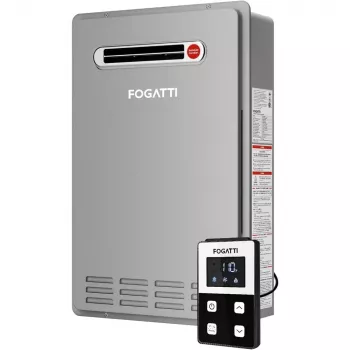
Product pick for outdoor, natural gas on-demand hot water
More from our store
FAQ
Does an outdoor tankless water heater need electricity?
Many outdoor tankless units use electricity for ignition, controls, and built-in freeze protection. If power is lost, the heater may not operate, and freeze-protection features may not function during cold weather.
How do cold temperatures affect an outdoor tankless heater’s hot water flow?
Cold weather can lower incoming water temperature, which increases the required temperature rise and can reduce how many gallons per minute the unit can deliver at your setpoint. Sizing around winter inlet temperatures and limiting simultaneous hot-water use helps prevent shortfalls.
What maintenance helps prevent temperature fluctuations in a tankless unit?
Regular descaling (based on water hardness), cleaning inlet screens, and keeping combustion air pathways unobstructed help maintain stable performance. If fluctuations persist, a professional should verify gas supply consistency and overall installation conditions.













Leave a comment