Humidity-Proof Frizz Control Routine That Actually Lasts
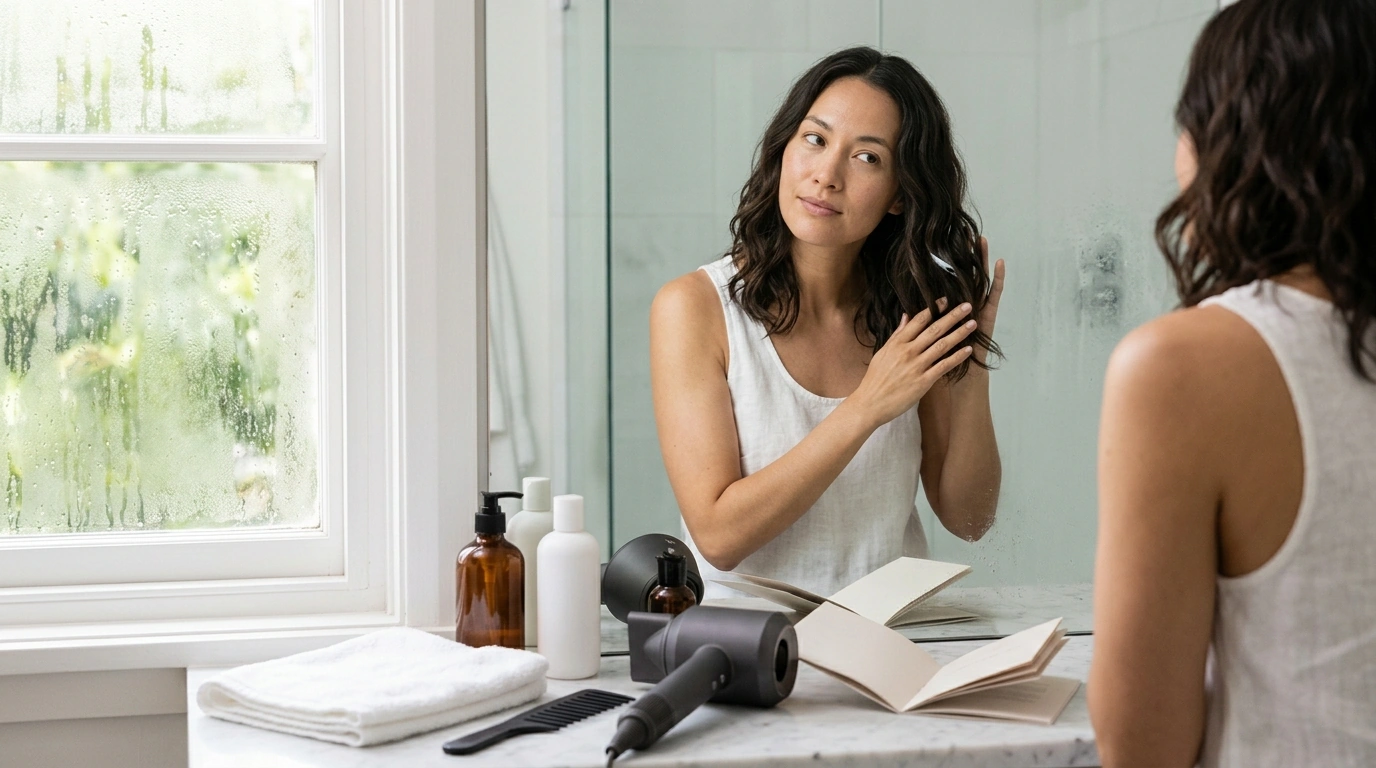
Smooth No Matter the Weather: A Humidity-Proof Routine for Frizz Control
Humidity can turn a great hair day into puffiness, flyaways, and lost definition within minutes. A reliable routine focuses on keeping the hair fiber hydrated (so it doesn’t grab moisture from the air), sealing the cuticle, and using styling methods that hold up when the dew point climbs. Below is a practical, step-by-step approach to reducing frizz in humid weather—plus a guided option for building a routine that matches hair type, porosity, and styling preferences.
Why hair frizzes when humidity rises
Frizz is often a moisture-management problem. When there’s more water vapor in the air, hair—especially hair that’s dry, damaged, porous, or chemically treated—can absorb that moisture quickly. As water enters the hair shaft, it disrupts hydrogen bonds and causes strands to swell and shift shape. That’s when smooth hair can “revert” into waves, curls can lose definition, and the surface can look fuzzy instead of sleek.
Porosity plays a big role. High-porosity hair typically has a more lifted or compromised cuticle, so moisture moves in and out more easily—great for soaking up conditioner, but also quicker to react on sticky days. Another useful clue is the dew point: when it’s high, hair tends to change fast even if the forecasted “humidity percentage” doesn’t look extreme. NOAA’s explanation of dew point vs. humidity helps clarify why some days feel instantly frizz-inducing (NOAA National Weather Service).
Wash-day foundations that help resist humidity
A humidity-proof finish starts in the shower. Over-stripping can make hair thirstier, which increases the chance it will pull water from the air later.
- Cleanse without over-stripping: Choose a gentle shampoo, or use a co-wash approach if your scalp tolerates it. The goal is clean roots without leaving lengths squeaky-dry.
- Condition thoroughly: Focus on mid-lengths to ends. Hair should feel soft and flexible, not waxy or heavily coated.
- Match conditioner richness to hair type: Fine hair often does best with lighter conditioners and shorter processing time; coarse or very dry hair can handle richer formulas and more slip.
- Try a cool or lukewarm final rinse: It can encourage the cuticle to lie flatter, which is especially helpful before a blowout.
- Prep for drying with less friction: Blot with a microfiber towel or soft T-shirt rather than rubbing. Reducing surface disruption lowers flyaways that “bloom” once you step outside.
For general hair-care best practices (including minimizing damage that can worsen frizz), the American Academy of Dermatology offers a solid baseline (American Academy of Dermatology Association).
Layering products for a humidity-resistant finish
Think of humidity defense as a sequence: hydrate, smooth, hold, then seal. Layering matters because sealants work best over a hydrated base—otherwise you can trap dryness and end up with hair that feels rough and still puffs up.
Product layering cheat sheet (adjust by hair density and porosity)
| Hair needs | Best layering order | Common mistakes to avoid |
|---|---|---|
| Fine hair prone to puffiness | Light leave-in → mousse or lightweight cream → small amount of serum on ends | Too much oil/serum at roots; heavy masks every wash |
| Medium density with occasional frizz | Leave-in → anti-frizz cream → heat protectant (if styling) → finishing spray | Skipping hold products on humid days |
| Coarse or high-porosity hair | Leave-in → richer cream → gel or setting product → seal ends with oil/serum | Applying sealants without hydration first; rough towel drying |
| Curly/wavy definition focus | Leave-in → curl cream → gel (cast) → diffuse → light oil to break cast | Touching hair while drying; no hold layer |
Humidity-proof styling methods (straight, wavy, curly)
Troubleshooting: what to change when frizz keeps coming back
A guided option for building a routine that matches your hair
A structured routine can reduce trial-and-error by aligning products, technique, and weather conditions—especially when humidity varies day to day. If you want a repeatable plan for hydration, smoothing, hold, and sealing (with practical adjustments for porosity and density), the Smooth No Matter the Weather ebook guide is designed around that step-by-step approach.
Shop picks
- Smooth No Matter the Weather | Ebook Guide on how to reduce frizz in humid weather | Humidity-Proof Hair Routine & Styling
- Corduroy Fabric Strap for Apple Watch
- milanese-magnetic-stainless-steel-band-for-apple-watch
- premium-leather-strap-for-apple-watch-49mm-45mm-44mm-41mm-40mm
FAQ
What causes frizz in humid weather even after styling?
Humidity lets moisture enter the hair shaft—especially if the cuticle is lifted or porous—swelling strands and disrupting the set. Frizz also returns faster when hair wasn’t fully dried, when there’s not enough hold or sealing layers, or when hair is touched while it’s still setting.
How can frizz be reduced without making hair look oily or flat?
Use a lightweight leave-in, then rely on mousse or gel for hold instead of heavy oils. Keep serums minimal and mostly on the ends, and adjust conditioning so hair feels flexible but not coated—especially if hair is fine.
Is it better to use oil or serum to fight humidity?
Either can help, but they work differently: oils seal and add softness, while many serums (often silicone-based) smooth the cuticle and reduce moisture exchange with less weight. For best results, apply either over a hydrating base and use a small amount where frizz shows most.















Leave a comment