Heavy-Duty Adjustable Grooming Table with Wheels & Arm
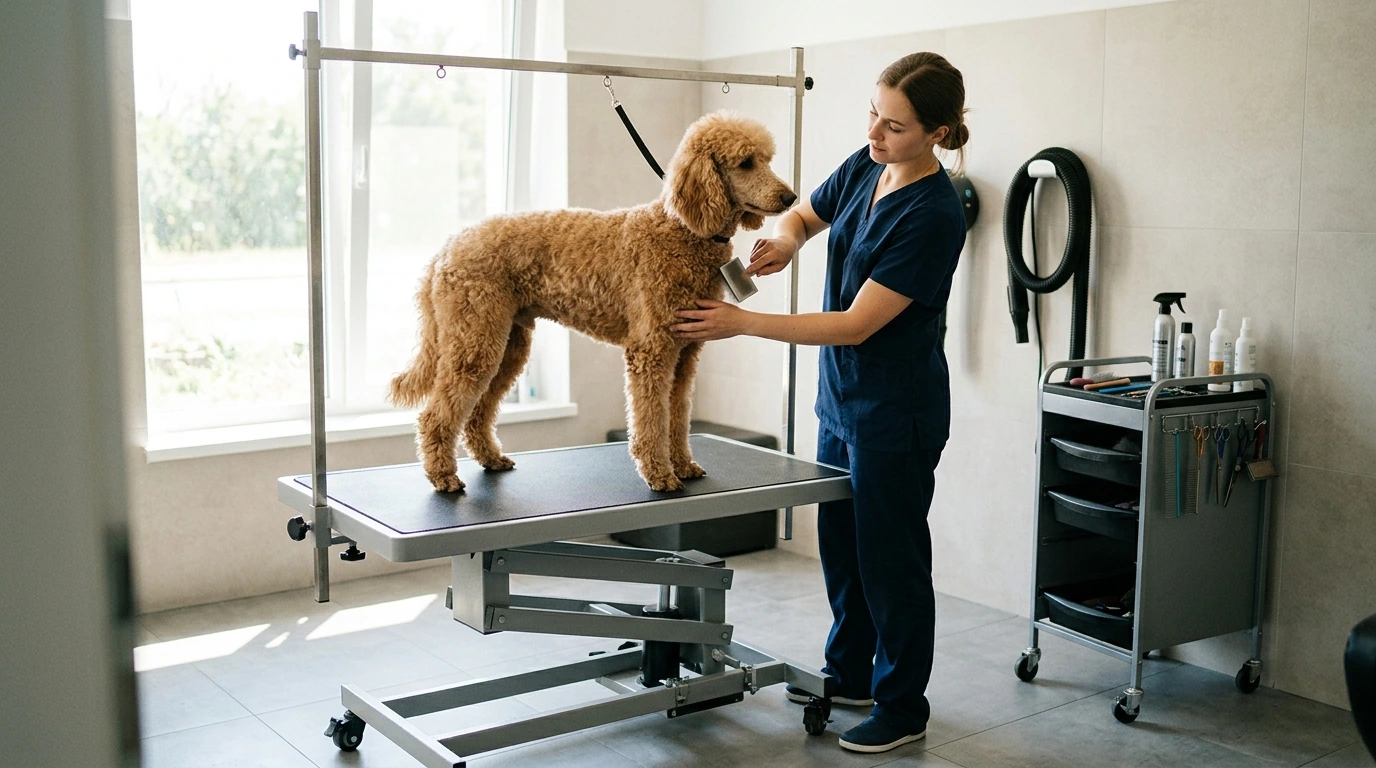
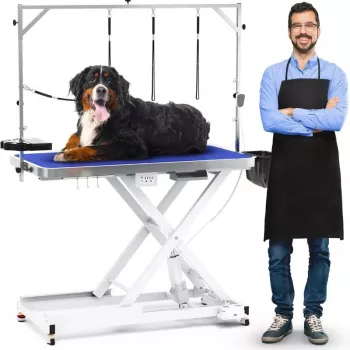
A sturdy grooming table can make bathing, brushing, trimming, and nail care safer and less tiring—especially with large dogs or frequent appointments. A heavy duty height adjustable grooming table with wheels and a grooming arm combines stable support, easier positioning, and controlled restraint to help keep pets secure while reducing back strain for the handler.
Who This Table Setup Works Best For
This style of grooming station is a practical match for a wide range of grooming routines, especially when stability and ergonomics matter as much as convenience.
- Home groomers managing medium-to-large dogs who need a stable platform and adjustable working height
- Mobile groomers who benefit from wheels for quick repositioning and better workflow in tight spaces
- Multi-pet households that need flexibility for different sizes, coats, and grooming routines
- Handlers who want a safer way to steady a pet during brushing, drying, clipping, or nail trims using a grooming arm
What “Heavy Duty” Should Mean in Daily Grooming
“Heavy duty” isn’t just about holding weight on paper. It shows up in how the table behaves when a dog leans, pivots, or decides to plant their feet mid-brush.
- Stable base: Resists wobble when a dog shifts weight or steps toward the edge.
- Surface grip: Helps paws stay planted, particularly during blow-drying or scissoring when dogs tend to brace.
- Frame strength: Built for higher loads and repeated use without joints loosening or flexing over time.
- Easy cleanup: Materials and components that tolerate moisture and hair buildup and wipe down quickly between dogs.
- Secure grooming arm hardware: The arm should stay aligned and resist twisting under gentle loop tension.
For general grooming fundamentals and coat-care routines, the American Kennel Club’s dog grooming basics is a helpful reference to pair with a safer, more controlled workstation.
Height Adjustment: Comfort, Control, and Safer Handling
The biggest day-to-day benefit of height adjustment is how it changes body mechanics. When the table is set correctly, hands work more precisely, shoulders stay relaxed, and long sessions feel less draining.
- Set the working height to keep shoulders relaxed and reduce bending during long sessions.
- Raise the table for small dogs to bring them closer to eye level for face and paw work.
- Lower the table for larger dogs to reduce lifting and make stepping on/off easier when appropriate.
- Confirm the lift mechanism locks firmly and doesn’t drift while grooming.
- Aim for a height that allows a neutral spine while reaching the pet’s back and legs.
Quick Height-Setting Guide by Grooming Task
| Task | Suggested Table Position | Why It Helps |
|---|---|---|
| Brushing/deshedding | Mid height | Reduces forward bending while maintaining control of the coat and skin |
| Face/ear trimming | Slightly higher | Improves visibility and precision around sensitive areas |
| Nail trimming | Mid to slightly higher | Keeps the paw within a comfortable reach and steadies the pet |
| Body clipping | Mid height | Supports consistent clip lines while limiting shoulder fatigue |
| Large-dog entry/exit | Lowered height | Minimizes strain and supports safer stepping on/off |
Wheels and Mobility: Useful When Done Safely
Wheels can be a genuine workflow upgrade, as long as stability remains the priority once grooming starts. Mobility is most helpful for cleaning under the table, shifting closer to outlets, or reworking the space between appointments.
- Wheels help move the table for cleaning, repositioning near outlets, or adjusting the grooming area layout.
- Look for locking casters that prevent rolling during grooming and keep the table stable under movement.
- Move the table only when the surface is clear and the pet is not on it unless the design explicitly supports that use.
- Check flooring: slick tile may require extra attention to caster locks and table placement.
- Keep cords, hoses, and grooming loops clear of wheels to prevent snagging.
Grooming Arm and Restraint: Stability Without Stress
A grooming arm can reduce sudden turns during scissoring or clipping, but it should always be used as a safety aid—not a substitute for supervision. Thoughtful restraint supports calmer handling and helps prevent risky jumps.
For general safety reminders around handling and bite prevention, review the AVMA dog bite prevention guidance, especially when grooming dogs that are new to the process or sensitive to paws and faces.
Setup, Care, and Maintenance Checks
For hygiene best practices when cleaning pet-contact surfaces, the CDC Healthy Pets, Healthy People resource is a solid baseline.
What to Expect from the Featured Table
Shop In-Stock Picks
- Heavy Duty Height Adjustable Grooming Table with Wheels and Grooming Arm
- Corduroy Fabric Strap for Apple Watch
- milanese-magnetic-stainless-steel-band-for-apple-watch
FAQ
Is it safe to use a grooming arm with a dog that moves a lot?
Yes, when it’s used correctly: fit the loop properly, keep it positioned above the shoulders, avoid excessive tension, and supervise the entire time. For highly anxious dogs, keep sessions shorter and focus on calm handling and breaks instead of tightening restraint.
Should the table be moved while the dog is on it?
Generally no—move the table only when the surface is clear and the pet is off it unless the manufacturer explicitly states it’s designed for safe movement with a pet onboard. During grooming, lock the casters to prevent shifting.
How do you pick the right height for grooming?
Choose a height that supports a neutral spine and relaxed shoulders while keeping the pet secure and within easy reach. Raise the table slightly for precision work like face and paws, and lower it for large-dog access to minimize lifting; always confirm the height lock is firmly engaged before starting.













Leave a comment