
Get More Done Without Burnout: A Simple Daily System
Get More Done Without Burning Out
Productivity gets easier when decisions are simplified: what matters, what happens next, and when to stop. A friendly system doesn’t demand constant motivation—it reduces overwhelm, protects energy, and helps turn good intentions into completed work. The goal isn’t to cram more into every hour. It’s to finish the right things consistently, with enough margin left to feel like a human at the end of the day.
What “getting more done” actually means
“Getting more done” is best measured by completed outcomes, not nonstop activity. A day filled with messages and meetings can feel busy while producing little that moves life forward.
- Define success as completing the right tasks, not packing your schedule to the brim.
- Separate outcomes from activity: “Finish the report” is an outcome; “answer emails” is an activity that may or may not support it.
- Use one weekly “north star” goal to prevent scattered priorities when new requests appear.
- Adopt fewer, clearer commitments: if it isn’t scheduled or reviewed, it isn’t real.
This mindset matters because long hours and constant pushing can backfire; quality and judgment drop when recovery disappears. Harvard Business Review summarizes research showing that sustained overwork hurts both people and results (HBR on long hours backfiring).
The simple system: capture, clarify, choose, complete
Most stress comes from carrying “open loops” in your head. A lightweight system moves those loops into a trusted place and turns them into clear next steps.
1) Capture
Write every open loop down in one trusted place (notes app, notebook, or task manager). One inbox list beats five scattered ones.
2) Clarify
Convert vague items into visible next actions. Replace “Plan project” with “Draft a 5-bullet outline” or “Email Alex to confirm scope.” If you can’t do it in one sitting, you don’t yet have a next action.
3) Choose
Select tasks using constraints: time available, energy level, and deadlines. A good choice isn’t always your favorite task—it’s the best fit for the current window.
4) Complete
Focus on one task at a time. Close the loop by marking it done and writing the next step if needed. Completion creates clarity; clarity creates momentum.
Keep the system lightweight: a single inbox list, a daily shortlist (3–7 items), and a calendar for anything time-bound.
Time management that works in real life
Time management is less about perfect schedules and more about protecting a few high-value blocks.
- Time-block around fixed commitments first, then assign 1–3 focus blocks for meaningful work.
- Use start/stop rules: begin at a fixed time and end when the block ends. Stopping on time prevents burnout and helps you trust your plan.
- Batch low-focus tasks (email, messages, admin) into one or two windows so they don’t leak into everything else.
- Use the two-minute rule carefully: do it now only if it won’t interrupt a focus block.
- Plan buffers for transitions and interruptions. Buffer time isn’t a luxury; it’s realism.
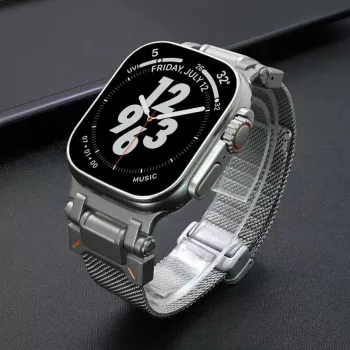
A simple timer helps focus blocks feel concrete. If a watch is part of your routine, a comfortable band can make it easier to keep timers and “do not disturb” on without fuss. Options like the Corduroy Fabric Strap for Apple Watch or the Milanese Magnetic Stainless Steel Band for Apple Watch can support that small-but-helpful “start the clock” habit.
Energy management: protect the fuel behind productivity
Time is the container; energy is what fills it. Stress and poor recovery don’t just feel bad—they affect concentration, mood, and decision-making. The American Psychological Association details how stress impacts the body and performance (APA on stress effects).
- Match difficulty to energy: do deep work when energy is high; save admin for low-energy periods.
- Create a pre-focus ritual to reduce friction: water, tidy desk, single tab, timer.
- Schedule recovery on purpose: short breaks, a quick walk, or a reset between demanding tasks.
- Reduce energy leaks: unclear priorities, constant notifications, and multitasking.
- Use a minimum viable day plan when you’re tired: one essential outcome + basic maintenance (messages, dishes, a short tidy).
Sleep is also a productivity tool, not a reward. For a helpful overview of why sleep supports learning and performance, see the National Sleep Foundation’s explanation (How sleep works).
A weekly reset that keeps the system running
Weekly reset checklist (15–30 minutes)
| Step | What to do | Time |
|---|---|---|
| Collect | Gather notes, loose tasks, and reminders into one inbox list | 3–5 min |
| Clear | Delete, archive, or delegate anything irrelevant | 3–5 min |
| Clarify | Rewrite priority items into next actions with verbs | 5–10 min |
| Choose | Pick 1 weekly focus + 3 key outcomes; schedule first steps | 5–10 min |
| Prepare | Set up files, links, and materials for the first focus block | 2–5 min |
Common obstacles (and quick fixes)
A friendly guide that turns these ideas into routines
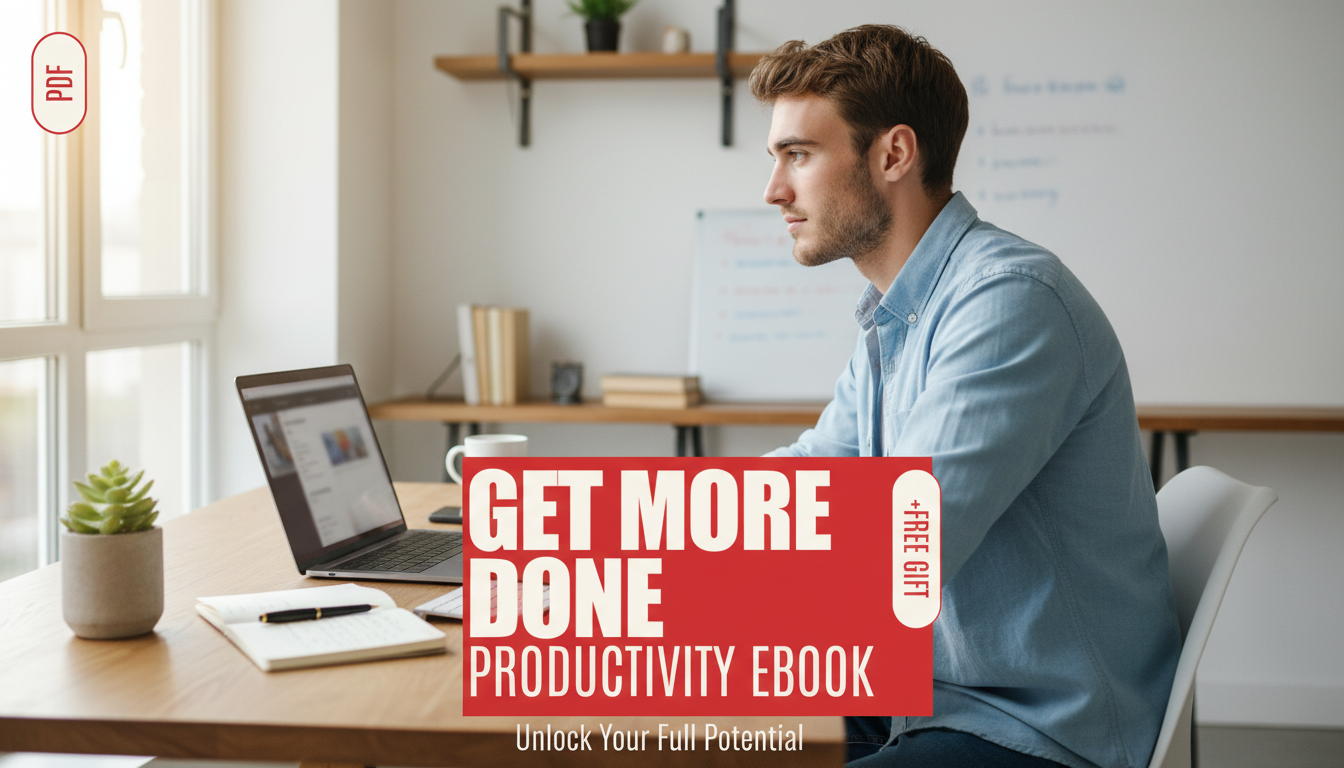
If you want the system laid out step-by-step with simple routines you can repeat, Get More Done: The Friendly Guide to Mastering Productivity focuses on practical time and energy management that fits real days. It’s best paired with a calendar and one trusted place for tasks and notes, so planning stays clear and lightweight.
For many people, a small “setup upgrade” helps consistency—like keeping a timer handy, using focus blocks, and making the tools you wear daily comfortable. If you use an Apple Watch to manage timers and notification boundaries, the Premium Leather Strap for Apple Watch is another option to keep that habit friction-free.
FAQ
How do I get more done?
Use a simple loop: capture everything, clarify next actions, choose 1–3 priorities for the day, and protect at least one focus block. Pair time-blocking with energy matching by placing your hardest work in your highest-energy window.














Leave a comment