Find a Hobby That Sticks: 2-Week Experiments & Routines
Find Your Next Favorite Thing: A Personalized Path to Hobbies, Creative Routines, and Skill Discovery
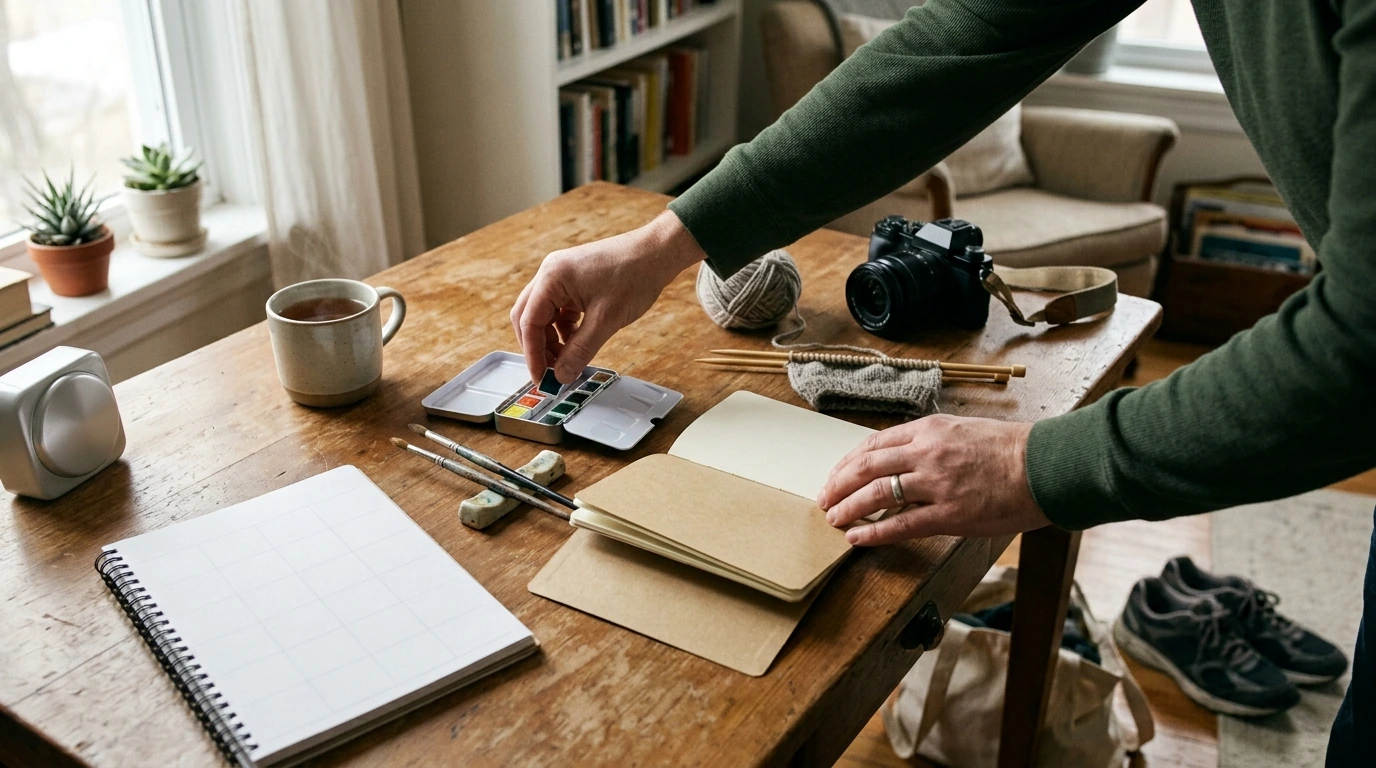
New interests can be hard to spot when time, energy, and options feel overwhelming. The fastest way to break that stalemate is to stop searching for “the perfect hobby” and start running small, personal experiments that match your schedule, budget, and real-life environment. Below is a practical method for discovering hobbies that fit—and turning the promising ones into repeatable routines that don’t disappear after a busy week.
Why “the right hobby” can feel hard to find
Hobby lists are everywhere, yet many people still feel stuck. Usually it’s not a lack of options—it’s the way options collide with real constraints.
- Too many choices: Endless suggestions create decision fatigue, so nothing feels worth starting.
- Mismatch between idea and reality: A hobby can sound fun but fail due to cost, space, time, or social needs.
- All-or-nothing expectations: Treating a first try as a lifelong commitment discourages experimentation.
- Hidden preferences matter: Sensory comfort, learning style, and energy patterns often decide whether a hobby fits.
One helpful shift is to treat hobbies as behaviors you can repeat, not identities you must adopt. A “habit” is commonly understood as a learned pattern that becomes automatic through repetition over time (see the APA Dictionary of Psychology definition), which is exactly why small, consistent sessions beat big bursts.
A personalized discovery method that works even on busy weeks
Start by designing your hobby search around your constraints. That sounds limiting, but it’s the reason ideas actually make it onto your calendar.
- Start with constraints (time windows, budget, space, mobility) before brainstorming ideas.
- Use a “two-week experiment” mindset: pick one idea, test it lightly, then keep, tweak, or replace.
- Track only three signals: enjoyment (did it feel good?), friction (what got in the way?), and pull (did you want to return?).
- Keep materials minimal at first; upgrade only after the hobby proves it earns repeat time.
- Choose a default schedule: 15 minutes on weekdays or one 60–90 minute session on weekends.
Quick-fit filters for hobby ideas
| Filter | Options to pick from | What it affects |
|---|---|---|
| Time | 5–15 min, 30 min, 60–90 min | How often it can realistically happen |
| Energy | Low, medium, high | Whether it fits after work or only on fresh mornings |
| Setting | Home, outdoors, studio/gym, on-the-go | Setup needs and consistency |
| Budget | $0–$10, $10–$50, $50+ | Tools, classes, and long-term sustainability |
| Social | Solo, partner, group, community | Accountability and enjoyment style |
| Outcome | Relaxation, creativity, fitness, skill-building | What “success” feels like |
What makes an AI-guided hobby generator different
Generic lists treat everyone the same. A guided generator can narrow the field to options that match your real life and preferred pace.
- Personalization instead of generic lists: ideas reflect preferences, constraints, and goals.
- Faster iteration: multiple tailored options appear quickly, making it easier to compare.
- Better fit for routines: suggestions can include starter steps, difficulty ramps, and variations.
- Skill discovery: patterns across tried ideas reveal what styles of learning and creation feel natural.
- Motivation support: recommendations can be shaped around novelty, structure, or calm repetition.
Inside “Find Your Next Favorite Thing”
If you want a structured way to generate ideas and follow through without overcommitting, Find Your Next Favorite Thing is built around a simple loop: personalize, test, learn, and repeat.
- A guided system to generate hobby ideas matched to lifestyle, personality, and practical constraints.
- A repeatable routine builder for turning curiosity into a weekly plan without overcommitting.
- Low-friction starter pathways: begin with tiny sessions, simple materials, and clear next steps.
- A skill-discovery approach that helps identify what types of activities create momentum.
- Flexible enough for creative hobbies, hands-on crafts, learning projects, movement, and mindful routines.
Because routines are easier when daily life feels comfortable, small lifestyle details can matter more than expected—like wearing something that doesn’t irritate you during a walk, stretch session, or journaling block. If you use an Apple Watch to time hobby sessions, the Corduroy Fabric Strap for Apple Watch is a cozy option for day-to-day wear, and the Premium Leather Strap for Apple Watch offers a more classic feel for work-to-weekend routines.
How to run a two-week hobby experiment (and actually learn from it)
Building creative routines that don’t collapse
Habit research and behavior-change guidance often points to the same principle: reduce friction and make the “next step” obvious. For a practical overview, see Harvard Health’s summary on the power of habits.
Choosing hobby ideas by outcome: calm, creativity, fitness, or mastery
- For calm: choose low-setup, repetitive activities that feel soothing rather than demanding.
- For creativity: favor hobbies with quick outputs (mini sketches, short writing sprints, small builds).
- For fitness: pick options that feel accessible and enjoyable before optimizing performance; the NHS guide to physical activity is a solid reference for safe, sustainable movement basics.
- For mastery: choose a narrow skill and practice in short, regular sessions.
- For social connection: prioritize communities with easy entry points (classes, clubs, local meetups, online groups).
Common pitfalls and simple fixes
Who this eBook fits best
FAQ
How fast can a new hobby start feeling like a real routine?
Two weeks is often enough to see whether an activity can fit your life. Keep sessions tiny, anchor them to an existing habit, and prioritize showing up over doing more.
What if every hobby idea sounds good but nothing sticks?
Filter ideas by constraints first, then track enjoyment, friction, and pull after each session. Before switching, adjust just one variable—time, tools, setting, or social format—so you learn what actually changes the outcome.
Is this better for beginners or people who already have hobbies?
Beginners benefit from clear starter steps and low-pressure experiments. People with established hobbies can use the same system to find adjacent skills, new formats, or a fresh routine when motivation dips.












Leave a comment