Calm Homework Routine: End Nightly Drama with a Checklist
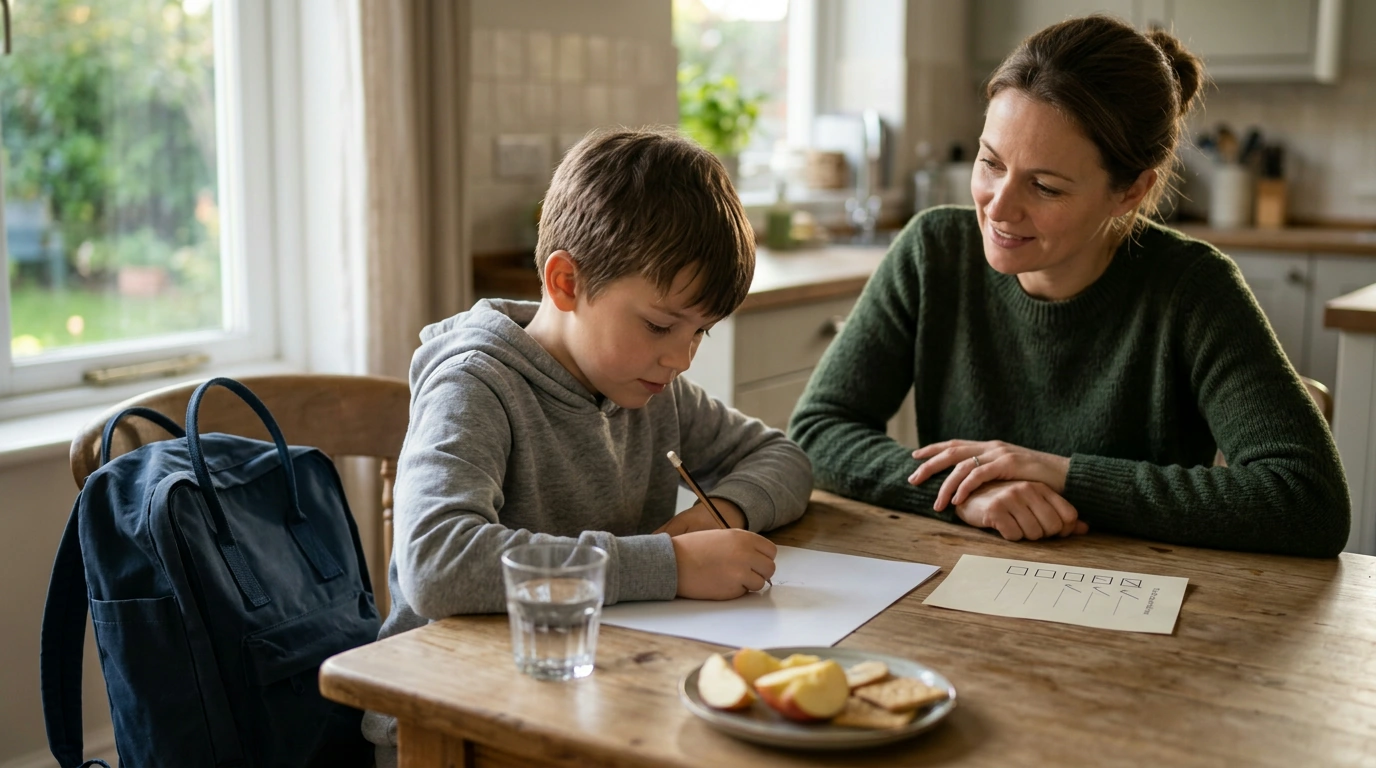
Homework Without the Nightly Drama: a calm, repeatable routine that actually sticks
Afternoons can go from “How was school?” to tears, stalling, and power struggles in minutes—especially when homework collides with hunger, tired brains, and kids who’d rather do anything else. A steady routine helps more than another lecture. Our team built this plan around our “Homework Without the Nightly Drama” checklist: a simple printable/digital set-up that turns homework into a predictable sequence—so calm afternoons can lead to stress-free evenings.
Why homework turns into drama (and what fixes it)
Most homework blowups aren’t about laziness—they’re about friction. Transitions are hard after a full school day, and kids often need food, movement, and decompression before their brains can focus again. Open-ended directions like “Go do homework” also invite negotiation; when kids have to decide what to do next, decision fatigue shows up fast.
A routine changes your role from “enforcer” to “coach.” Instead of repeating reminders, you can point back to the same steps every day. The goal isn’t perfection or a silent house—it’s a repeatable flow that works on most school days and lowers the emotional temperature.
Set up the routine once: the 10-minute reset that makes afternoons easier
You only have to design the system once. After that, you’re mostly repeating the same sequence.
- Pick a consistent start cue: for example, snack first, then homework. Same order each day reduces resistance.
- Create a “homework home” for supplies: pencil, charger, paper, calculator, headphones—stored in one spot to avoid constant getting up.
- Choose one workspace rule that matters most: such as “the table stays clear except homework materials.”
- Decide what “done” means: completed work packed back into the folder/backpack, plus a quick parent check if needed.
- Use a visual checklist: so the routine doesn’t live only in your reminders.
Homework Routine Setup Checklist (quick start)
| Step | What to decide | Keep it simple |
|---|---|---|
| Start cue | When homework begins | After snack + 5-minute break |
| Workspace | Where work happens | One spot most days |
| Tools bin | What stays within reach | Basics only—no clutter |
| Break plan | When breaks happen | After each subject or 15–20 minutes |
| Finish routine | How work is wrapped up | Pack it + place by the door |
How to use our Homework Without the Nightly Drama checklist (printable or digital)
The checklist works best when it becomes your child’s guide, not another parent tool. Start with the same sequence daily: arrive home → decompress → snack/water → set up workspace → homework block → short break → finish + pack. When your child checks off steps, they’re practicing self-management while you step back from policing.
Keep it visible—on the fridge, inside a binder, or on a tablet if you prefer a digital download. Then shift your language to match the steps: “What’s next on your checklist?” lands calmer than “How many times do I have to tell you?”
To make it even more automatic, pair the checklist with a timer: short work sprints followed by planned breaks reduce wandering and bargaining mid-task.
Our team created the checklist here: Homework Without the Nightly Drama – Child Homework Routine Help Checklist for Calm Afternoons & Stress-Free Evenings (Printable Digital Download).
A calm-afternoons workflow (with built-in flexibility)
The sequence matters more than exact minutes. If practice runs late or dinner shifts earlier, keep the order the same and your routine stays stable.
Sample weekday schedule (adjust to fit your home)
| Time block | What happens | Why it helps |
|---|---|---|
| After school (10–20 min) | Snack + decompress | Reduces tired-brain arguments |
| Work block 1 (15–25 min) | One subject/assignment | Short enough to start |
| Break (3–5 min) | Stretch, water, quick reset | Prevents escalation |
| Work block 2 (15–25 min) | Next assignment | Keeps momentum |
| Wrap (2–5 min) | Check off + pack + place in launch spot | Stops evening/next-day drama |
Common friction points—and simple fixes that match the checklist
Make it stick for weeks (not just two good days)
A quick note on expectations by age
Tools that support the routine (optional, but helpful)
- Homework Without the Nightly Drama checklist (printable/digital): the visual driver that keeps the sequence consistent.
- Corduroy Fabric Strap for Apple Watch: helpful if you use wrist timers and want something comfortable for everyday wear.
- Milanese Magnetic Stainless Steel Band for Apple Watch: a quick-adjust option if different caregivers run homework blocks and prefer easy fit changes.
What research supports a calmer approach
When kids are stressed, routines and supportive structure help them regain a sense of control. For practical guidance on homework’s role and healthy expectations, see the American Academy of Pediatrics (HealthyChildren.org): Homework. For background on how stress affects children, the American Psychological Association is a solid reference. And for the bigger picture on parent engagement and learning routines, the CDC Healthy Schools: Parent Engagement overview is useful.
FAQ
Is this checklist better as a printable or a digital download?
Both work well: printable is easy to keep visible on a fridge or desk, while digital is convenient on a tablet or phone. For younger kids, starting with a printable often helps because it stays in sight; older kids may prefer digital. The key is using the same steps either way.
What if homework still causes meltdowns even with a routine?
Check the basics first (snack, rest, and whether the workload is realistic), then shorten work blocks and add breaks before frustration spikes. Keep “help windows” so your child tries independently first, and if the struggle looks like confusion or too much work, loop in the teacher to problem-solve calmly.
How long does it take for a new homework routine to feel normal?
Many families notice improvement in 1–3 weeks with consistent repetition and minimal changes. The goal is fewer conflicts and faster starts—not zero resistance on every single day.














Leave a comment