AI-Guided Mobility & Stretching Plans for Daily Recovery
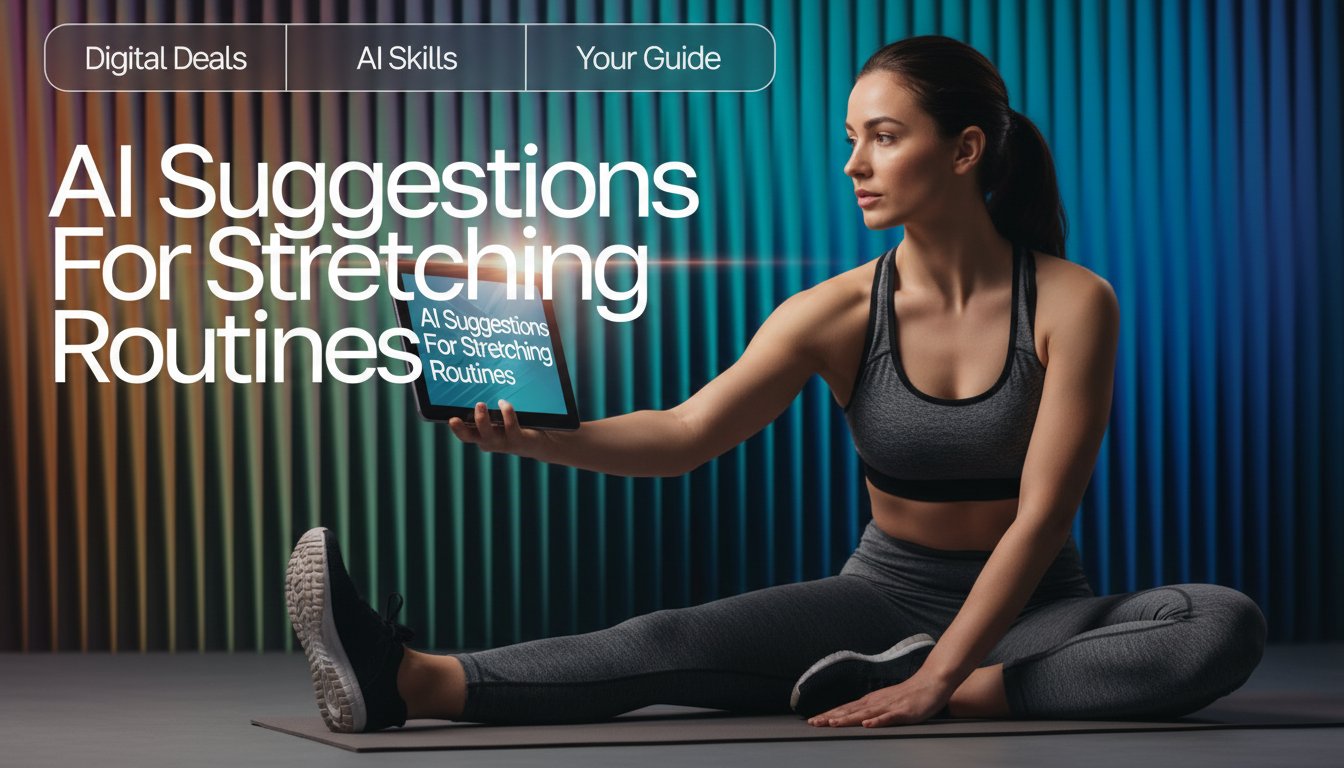
AI-Powered Routines for Flexibility & Wellness: Personalized Mobility and Recovery Made Simple
Consistency is the hardest part of flexibility and mobility work—especially when time, soreness, and changing schedules get in the way. A digital guide with AI-driven routine suggestions can help match stretches to goals, tight areas, and recovery needs so sessions stay realistic, repeatable, and safe. Instead of guessing what to do each day, you get a clear “start here” plan that adapts to how your body feels.
What “AI-powered” means for stretching and mobility
“AI-powered” doesn’t mean complicated workouts or endless tracking. It means routine suggestions that turn your priorities into a simple session you can actually complete.
- Translates goals (looser hips, better posture, recovery days) into structured sessions instead of random stretches.
- Helps vary intensity and duration based on day-to-day feedback like stiffness, soreness, and available time.
- Encourages balanced mobility by rotating muscle groups and movement patterns to avoid overdoing one area.
- Supports habit-building with shorter “minimum effective” sessions when motivation is low.
- Works best when paired with clear self-checks (pain vs. stretch sensation, range of motion changes, fatigue).
For general flexibility guidance, the American College of Sports Medicine (ACSM) recommends regular flexibility work as part of a well-rounded program, and Harvard Health Publishing notes that stretching can support day-to-day function when done consistently and safely.
Who benefits most from personalized flexibility and recovery routines
- Desk workers with hip flexor, hamstring, chest, and upper-back tightness from prolonged sitting.
- Active adults who lift, run, cycle, or play sports and want better joint mechanics and recovery support.
- Beginners who need a simple plan with progressions and guardrails (duration, frequency, intensity).
- People returning after a break who need gradual ramp-up and more frequent low-intensity sessions.
- Anyone who struggles with decision fatigue and wants a clear “do this now” routine.
How to use AI suggestions without overcomplicating your routine
The most effective plan is the one you repeat. Keep the inputs simple, keep the sessions short, and let the routine suggestions do the organizing.
- Pick one primary outcome for the next 2–4 weeks (mobility, relaxation, post-workout recovery, or posture support).
- Limit sessions to 10–20 minutes on most days; add one longer session weekly if desired.
- Use a simple readiness check: stiffness level (1–10), soreness (none/mild/moderate), and time available.
- Prioritize quality: slow breathing, controlled positions, and gentle range increases—never sharp pain.
- Track only what matters: which areas feel freer, which moves irritate, and how recovery feels the next day.
If you use a smartwatch to time intervals or remind you to start, a comfortable band can make daily sessions easier to stick with—options like the Corduroy Fabric Strap for Apple Watch or the milanese-magnetic-stainless-steel-band-for-apple-watch can help keep your “10-minute minimum” routine friction-free.
Sample weekly structure (adjustable to your schedule)
Short daily sessions tend to outperform occasional long sessions for most people. To stay balanced, rotate emphasis across the week and use lighter “reset” days after hard training or poor sleep.
| Day | Focus | Time | Notes |
|---|---|---|---|
| Mon | Hips + thoracic mobility | 12–15 min | Great after sitting; keep it light |
| Tue | Hamstrings + calves | 10–12 min | Add gentle active movements before longer holds |
| Wed | Recovery reset | 8–10 min | Breathing + easy range; no pushing intensity |
| Thu | Shoulders + chest | 12–15 min | Helpful for posture and upper-body training days |
| Fri | Full-body mobility flow | 15–20 min | Moderate intensity; smooth transitions |
| Sat | Targeted tight area | 10–15 min | Let AI suggestions focus on the stiffest region |
| Sun | Longer unwind session | 20–30 min | Lower intensity, longer holds, relaxation |
What to include in a session: warm-up, mobility, flexibility, and recovery
A well-built session moves from “prepare” to “practice” to “downshift.” This keeps tissues happier and makes flexibility gains more usable.
- Warm-up (2–4 minutes): gentle joint circles, cat-cow style movements, easy bodyweight patterns.
- Mobility (4–8 minutes): controlled active ranges (e.g., hip CAR-style movements) to build usable motion.
- Flexibility (4–10 minutes): longer holds for key areas; intensity should feel like strong stretch, not pain.
- Recovery finish (2–5 minutes): nasal breathing, slow exhales, comfortable positions to downshift tension.
- Progression rule: increase time or range gradually—avoid increasing both at the same time.
Safety and common mistakes to avoid
What’s included in the digital guide and how it fits into a wellness routine
The AI-Powered Routines for Flexibility & Wellness digital guide is designed for quick, repeatable sessions you can run on a busy day without planning or searching. It’s a digital download you can keep on your phone or tablet so your routine is ready when you are.
Getting started: a simple 7-day reset plan
Digital guide details and availability
- Product: AI-Powered Routines for Flexibility & Wellness | Digital Guide | AI Suggestions for Stretching Routines | Personalized Mobility & Recovery eBook
- Format: digital download for easy access during sessions
- Price: $7.99 USD
- Availability: in stock
FAQ
How often should stretching and mobility work be done for noticeable results?
For most people, 10–20 minutes on most days (or 3–5x/week) is enough to notice changes in how you move and recover. Give it 2–4 weeks of steady reps, and consider adding one longer session weekly if it feels good.
Is it better to stretch before or after a workout?
Before training, focus on a brief warm-up and dynamic mobility to prepare your joints and tissues. After training (or later in the day), longer holds and recovery-focused breathing tend to fit better, especially if strength or power is the priority.
What if a stretch causes pain or tingling?
Stop and modify the position or range immediately—sharp pain, numbness, tingling, or pinching are signals to back off. If symptoms persist, follow an injury, or radiate, it’s smart to get guidance from a qualified clinician.















Leave a comment