Remove Car Odors Fast: Source→Surface→System Checklist
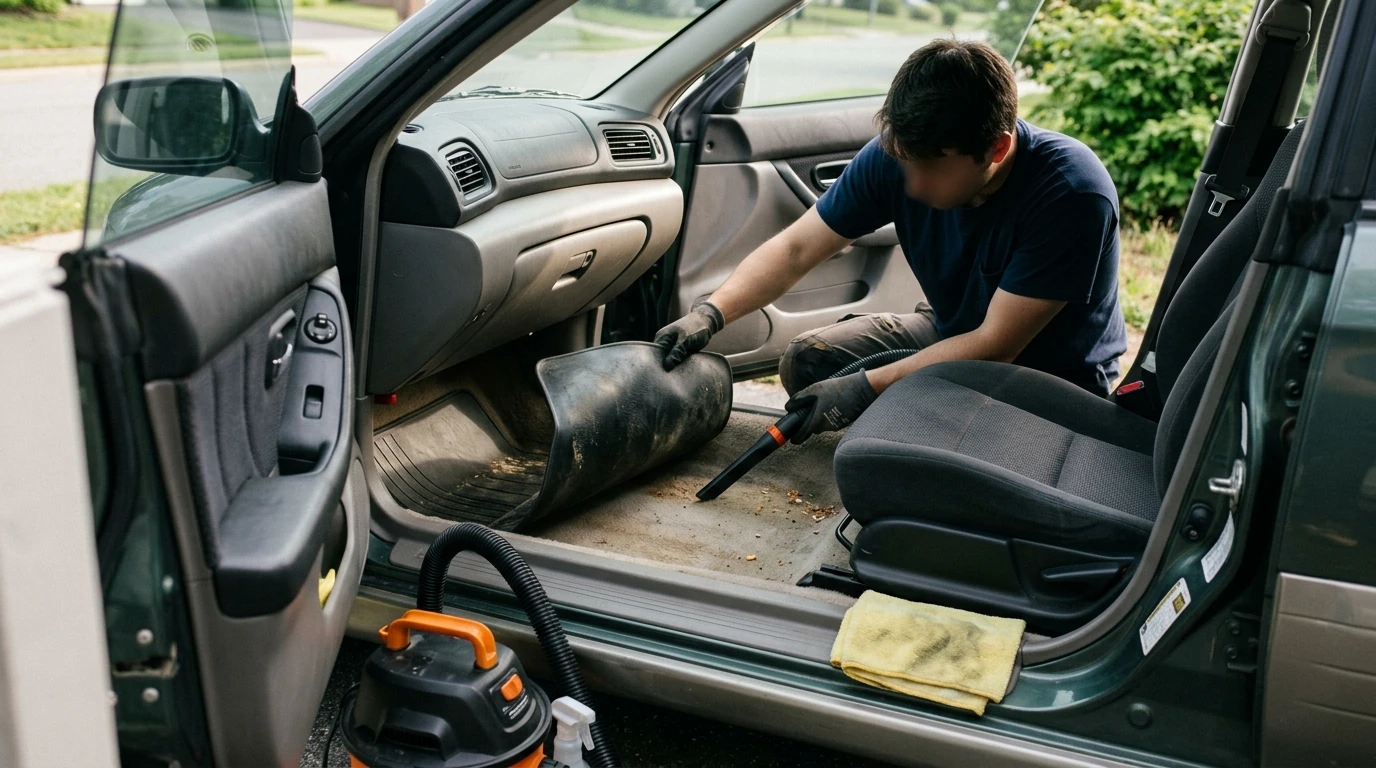
Fresh Air Fast: A Simple, Fast System for Getting Odors Out of Your Car
A car can look clean and still smell off—because odor usually lives in hidden places: fabric padding, vents, moisture pockets, and the trunk. Our Fresh Air Fast | Easy Car Smell Removal Guide, Odor Elimination Checklist (Digital Download) turns “try everything” into a clear order of operations. You’ll use it like a practical checklist: locate the source, remove it, clean what holds it, and keep it from returning—without spending time on steps that don’t match the smell.
Start with the 10-minute reset (fast wins before deep cleaning)
Before you break out cleaning tools, get the quick wins that solve a surprising number of smells:
- Remove obvious sources first: trash, old food packaging, gym bags, wet umbrellas, and anything soaked into carpet or seat fabric.
- Ventilate strategically: open doors for a few minutes, then run the fan with fresh air (not recirculate) to push stale air out.
- Do a quick fabric sweep: shake out floor mats, and check under seats where spills and forgotten items hide.
- If the smell is new, act today: fresh spills and moisture are dramatically easier to neutralize than “set” odors.
Quick odor clues: what to check first
| Smell type | Most common hiding spot | First action to try |
|---|---|---|
| Sour / milk / food | Under seats, seat seams, cup holders, floor mats | Remove the source, wipe hard surfaces, wash mats, spot-clean fabric |
| Musty / damp | Carpet padding, trunk, spare-tire well, door seals | Dry thoroughly, locate moisture entry, treat affected fabric |
| Smoke | Headliner, vents, seat foam, cabin filter | Replace cabin filter, clean interior surfaces, target soft materials |
| Chemical / sweet | Spills, cleaners, coolant leak (if persistent) | Ventilate, stop using fragranced sprays, inspect for leaks if ongoing |
Use the checklist method: source → surface → system
Random steps create random results. Our team built Fresh Air Fast around a simple sequence that prevents “it smells better… then it comes back.”
1) Source: remove what created the odor
Identify the cause (spill, moisture, smoke residue, pet mess) and remove it first. Masking sprays can make the cabin smell more complicated—odor plus fragrance—without solving the root problem.
2) Surface: clean what absorbed it
Next, clean the materials that hold odor: carpet, upholstery, mats, trunk liner, and seat creases. Odor lives in fibers and padding, not just on the visible surface, so prioritize fabric contact points (footwells, seat bottoms, and anything that stayed damp).
3) System: fix airflow and HVAC carryover
A clean interior can still smell if the HVAC is holding odor. That’s why the final step is checking vents, the cabin air filter, and whether recirculation is keeping stale air trapped.
HVAC and cabin filter: the overlooked odor trap
- Replace the cabin air filter if odors linger after cleaning—especially for smoke, musty smells, or “dirty sock” odor when the fan turns on.
- Flush with fresh air first: recirculation can keep odor cycling inside.
- Test methodically: if the smell appears only with AC or heat, focus on moisture control and airflow—dry the interior, then re-test with fan-only vs. AC-on to narrow it down.
- Skip heavy vent fragrances: they can combine with existing odors and create a stronger, longer-lasting smell.
If you suspect dampness or mold, moisture control matters as much as cleaning. For background on why moisture leads to persistent odor and growth, see the U.S. EPA guidance on mold and moisture and the CDC’s mold basic facts.
Stubborn odors: what to do when “clean” still smells
- Treat soft materials as the priority: headliner, seat fabric, carpet padding, and trunk liners can hold odors even when surfaces look spotless.
- Work in layers: remove residue (cleaning), neutralize odor (odor treatment), then dry completely (prevents rebound).
- Check hidden moisture: spare tire well, trunk corners, and under-floor storage compartments are common musty hotspots.
- If it keeps returning, assume an ongoing source: a leak, moisture intrusion, repeated spill area, or a neglected filter can recreate the smell after every “successful” cleanup.
Prevention: keep the car smelling neutral (not perfumed)
How the Fresh Air Fast digital guide fits into real life
Grab it here: Fresh Air Fast | Easy Car Smell Removal Guide, Odor Elimination Checklist (Digital Download).
A quick add-on for your next drive
If you’re doing a full reset anyway, it’s also a good moment to refresh the small things you interact with daily. Our team keeps a few simple upgrades in stock, like the premium leather strap for Apple Watch—a small change that can make your commute feel “new” again once the cabin smells neutral.
FAQ
Why does the smell come back after cleaning?
Most rebound happens when moisture wasn’t fully dried, odor is still trapped in padding/foam/headliner, or the HVAC (especially the cabin filter) is holding odor and redistributing it. Use a source → surface → system order and don’t call it done until everything is dry and the fan test stays clean.
Should the fan be on recirculate or fresh air while removing odors?
Use fresh air to flush the cabin while you’re removing odors, because recirculation can keep stale air cycling. You can switch modes briefly during testing to help confirm whether the smell is coming from the interior materials or the HVAC system.
What are the most common places a “mystery smell” hides?
The usual hiding spots are under-seat areas, floor mats and carpet padding, the trunk and spare-tire well, cup holders/center console, seat seams, and the cabin air filter/vents. These areas trap residue and moisture even when the visible surfaces look clean.
















Leave a comment