Shoe Size Checklist: Measure Length, Width & Fit Fast
How to Pick the Right Shoe Size: A Step-by-Step Checklist for Perfect Fit
Getting the right shoe size is more than a number on a box—fit depends on foot length, width, volume, toe shape, and even the time of day. Use the practical checklist below to measure accurately, translate measurements into a starting size, and confirm comfort with quick at-home tests before committing to a pair.
Before You Start: What Changes Shoe Fit
- Time of day matters: Feet can swell as the day goes on, so measure later in the afternoon or evening for the most realistic size.
- One foot is usually bigger: Fit to the larger foot. Fine-tune the smaller foot with lacing, a tongue pad, or a thin insole if needed.
- Socks and orthotics change the outcome: Measure while wearing the sock thickness you normally use for that shoe type, and include any inserts or orthotics.
- Brand and category differences are real: Running shoes, dress shoes, boots, and sandals can vary in shape and internal volume. Treat the printed size as a starting point—not a guarantee.
For broader footwear-fit and foot-health guidance, resources from the American Podiatric Medical Association (APMA) and AAOS OrthoInfo can be helpful, especially if pain persists.
Step 1: Measure Foot Length at Home (Accurate Enough for Most Purchases)
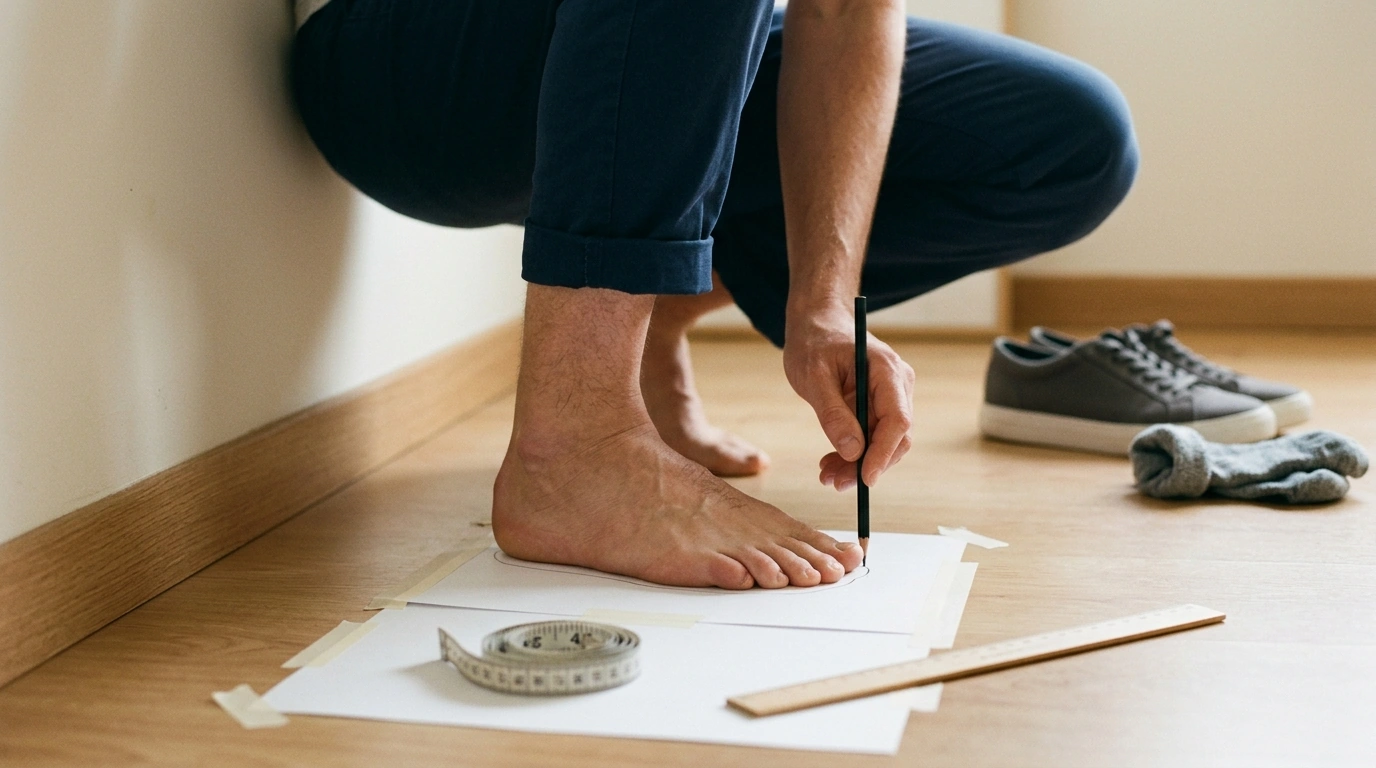
- Tools: two sheets of paper, tape, a pencil, and a ruler or measuring tape.
- Tape the paper to a hard floor (not carpet). Stand with full weight on the paper and keep your heel lightly against a wall for alignment.
- Trace each foot with the pencil held upright (not angled under the foot). Mark the furthest point of your longest toe and the back of your heel.
- Measure heel-to-longest-toe in millimeters for both feet. Use the longer measurement as your reference length.
- If you’re between sizes, note the gap you need to cover: many size steps are roughly 8–9 mm in length (varies by sizing system and brand).
Step 2: Measure Width and Foot Volume (Where Most Fit Problems Start)
- Width check: Wrap a measuring tape around the widest part of the forefoot (the ball of the foot) while standing. Record the circumference and compare it to brand guidance when available.
- Quick width clue: If your traced outline reaches the paper edge around the ball area, a wide option (W/EE) may be a better starting point.
- Don’t ignore volume: High insteps often need more space across the top of the foot; low-volume feet can slide in high-volume shoes even if length is correct.
- Common signals: Tingling or numbness often points to width/volume pressure. Heel lift often points to too much volume or weak heel hold.
Step 3: Convert Measurements to a Starting Size (Then Validate Fit)
Quick Fit Checks and What They Usually Mean
| Check | Good Sign | If It Fails, Likely Cause | Common Fix |
|---|---|---|---|
| Toe room (standing) | About a thumb’s width from longest toe to shoe end | Too short or toe box too shallow | Try half size up or a roomier toe shape (round/almond) |
| Width across the ball | No pinching; upper doesn’t bulge at sides | Too narrow | Try wide width (W/EE) or a different last/brand |
| Heel hold | Heel feels secure with minimal lift | Too much volume or weak heel counter | Heel-lock lacing, thicker socks, or volume-reducing insole |
| Instep comfort | Laces tighten without pressure on top of foot | Too low volume or tight tongue/eyelets | Loosen lacing pattern or choose higher-volume model |
| Walk test (5–10 minutes) | No hot spots, rubbing, or numbness | Friction points or pressure zones | Different size/width, different sock, or different shoe construction |
Step 4: Do the In-Shoe Checklist (Fast Tests That Prevent Returns)
Step 5: Adjust Fit by Shoe Type (Sneakers, Dress Shoes, Boots, and Sandals)
Common Fit Problems and Simple Troubleshooting
If foot pain is persistent or worsening, consult a qualified clinician; the NHS foot pain overview is a practical starting point for understanding common causes and next steps.
Printable Checklist Option
For a ready-to-use checklist that can be saved, printed, or kept on a phone for shopping, use the downloadable guide here: How to Pick the Right Shoe Size: A Step-by-Step Checklist for Perfect Fit.
Recommended Picks (In Stock)
- How to Pick the Right Shoe Size: A Step-by-Step Checklist for Perfect Fit — a simple, printable reference to keep measurements and fit checks consistent from brand to brand.
- Corduroy Fabric Strap for Apple Watch — a soft, casual band option for everyday wear.
- Premium Leather Strap for Apple Watch — a classic look that pairs well with dressier outfits.
FAQ
Is it better to size up or size down if measurements fall between sizes?
Usually size up if toes feel close to the front, swelling is common, or the shoe is for walking/running. Size down only when the model runs long and heel slip is the main issue that lacing cannot fix.
How much space should be in front of the toes?
Aim for about a thumb’s width when standing. Confirm your toes can wiggle and that the shoe doesn’t press on the longest toe during walking.
Why do two shoes with the same size fit differently?
Different lasts (shape), toe box height, width options, materials, and internal volume all change fit. Validate with toe room, width comfort, heel hold, and a short walk test rather than relying on the label alone.















Leave a comment