AI Tools to Track Dog & Cat Anxiety: Wearables to Cameras
Smart AI Tools to Understand and Monitor Pet Anxiety in Dogs and Cats
Pet anxiety can look like barking, hiding, pacing, over-grooming, or changes in appetite—and it often fluctuates when triggers appear. Modern monitoring tools can help spot patterns earlier by combining behavior cues with signals like activity, sleep, and (for some devices) physiological data. A practical goal isn’t to “measure feelings,” but to build a reliable picture of what changes, when it changes, and how long it takes your pet to recover so training and veterinary support can be more targeted.
What Pet Anxiety Looks Like (and What It Can Be Confused With)
Anxiety typically rises around predictable stressors: separation, loud noises (thunder, fireworks), visitors, travel, routine changes, conflict with other pets, or discomfort from pain or illness. Dogs often show panting when it isn’t hot, trembling, destructive chewing, excessive vocalization, pacing, clinginess, or refusing food when alone. Cats more commonly hide, over-groom, change litter box habits, show sudden aggression, reduce play, vocalize at night, or shift their appetite.
Because many medical problems can mimic anxiety—pain, thyroid issues, gastrointestinal discomfort, or cognitive decline in seniors—new, severe, or escalating signs deserve a veterinary check. Trusted overviews from the Merck Veterinary Manual and practical owner resources from the AVMA can help you recognize red flags and decide when to escalate.
The purpose of monitoring is to identify your pet’s baseline behavior, detect deviations, and connect those deviations to specific triggers and times of day—so you’re not relying on memory or guesswork.
A Simple Monitoring Framework: Baseline → Trigger → Response → Recovery
1) Baseline
Record normal sleep, activity, feeding, and typical alone-time behavior for 7–14 days. This baseline becomes your comparison point for “good days” versus “hard days.”
2) Trigger
Write down the exact event (doorbell, vacuum, thunder, owner leaving, a new pet) and any early warning signals. Dogs may show stiff posture or a tucked tail; cats may flatten ears, dilate pupils, or freeze before bolting.
3) Response
Capture intensity and duration: minutes of pacing, number of barks, frequency of grooming, hiding time, or how often your cat checks doors/windows.
4) Recovery
Track how long it takes to settle and return to normal: lying down, eating, playing, exploring, or grooming normally. Recovery time is often the most useful metric for seeing progress.
Use consistent scoring (0–3) so your notes stay comparable week to week.
Practical Anxiety Tracking Scorecard (Example)
| Category | What to Observe | 0 (Normal) | 1 (Mild) | 2 (Moderate) | 3 (Severe) |
|---|---|---|---|---|---|
| Body language | Posture, ears, tail, facial tension | Relaxed | Occasional tension | Frequent tension, avoidance | Frozen, cowering, panicked |
| Vocalization | Barking/meowing/whining | Typical | Slightly increased | Sustained episodes | Prolonged, hard to interrupt |
| Activity | Pacing, restlessness | Normal routine | Short pacing bursts | Repeated pacing loops | Constant pacing or frantic movement |
| Destructive/compulsive | Chewing, scratching, over-grooming | None | Occasional | Recurring | Self-injury or major damage |
| Recovery time | Time to settle after trigger ends | < 5 minutes | 5–15 minutes | 15–60 minutes | > 60 minutes |
AI Wearables: What They Can (and Can’t) Tell You
Pet wearables are most useful for trend tracking: daily activity, sleep duration/quality, restlessness, and sometimes GPS location. When anxiety spikes, you may notice more fragmented sleep, increased pacing/restlessness, or an unusual drop in activity after a stressful event.
Physiological measures vary by product. Some devices provide heart-rate trends or stress-related proxies, but accuracy can be affected by fit, coat thickness, breed conformation, and motion artifacts (like vigorous scratching or shaking). The best approach is to compare your pet to their own baseline rather than relying on universal “normal” thresholds.
Fit and comfort matter. Use proper sizing, introduce the device gradually, and check daily for irritation. If snag risk is high (rough play, crate wire, climbing cats), remove the wearable during those periods. Most importantly: wearables can’t confirm emotions—they provide signals you interpret alongside behavior, environment, and context.
Apps and AI Pattern Recognition: Turning Notes Into Clear Insights
AI becomes more helpful when your data is consistent. Choose one place to log events: departure times, walks, feeding, visitors, medication, training sessions, and notable stressors (construction noise, storms, fireworks). The goal is to create a timeline you can review quickly.
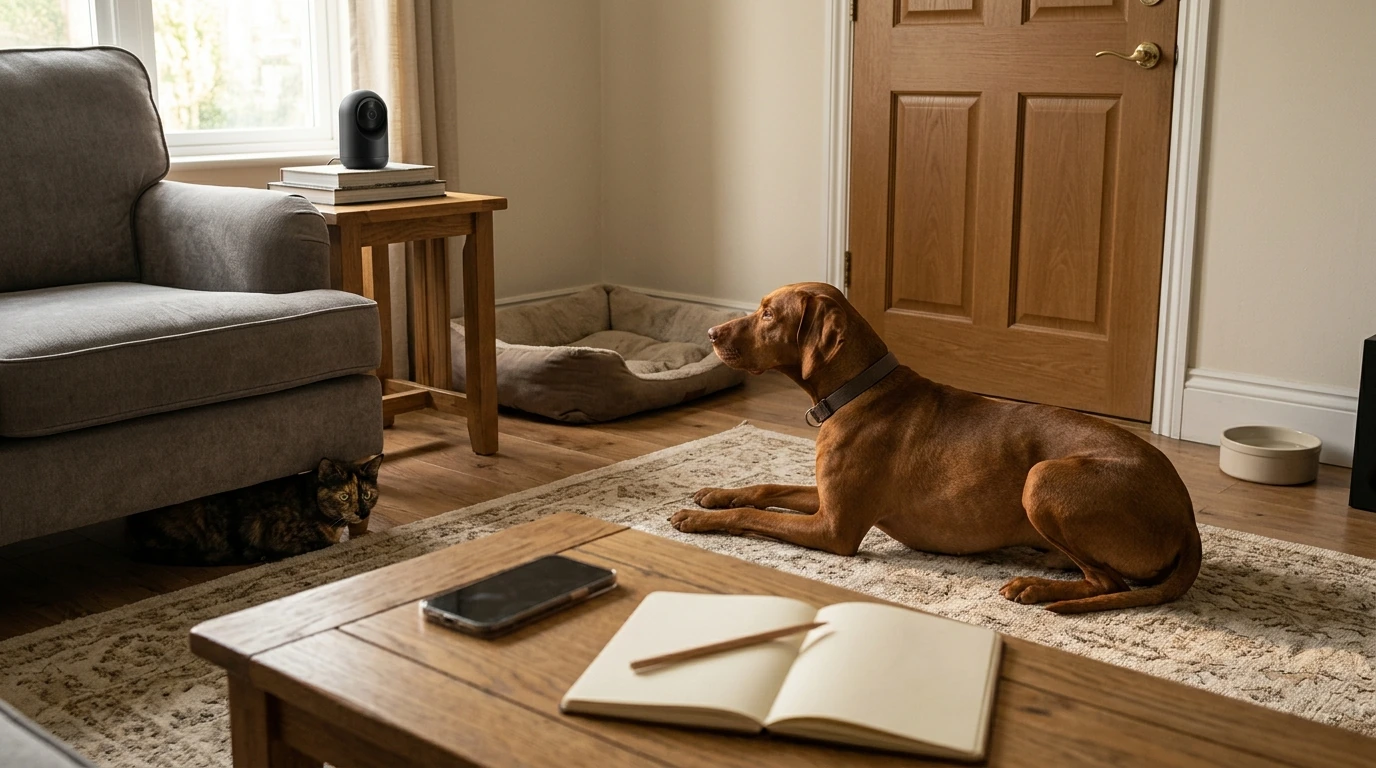
Home Monitoring With Cameras and Audio: Capturing What Happens When Nobody Is Watching
For general stress signals and welfare pointers, the RSPCA guidance is a helpful reference for dogs and cats.
Interventions You Can Evaluate With Data (Not Guesswork)
Using the Ebook Guide to Build a Repeatable Monitoring Routine
Recommended resource:
Smart AI Ways to Understand and Monitor Pet Anxiety – Practical Ebook Guide with AI Ways to Monitor Pet Anxiety Levels, Wearables, Apps & Home Monitoring for Dogs and Cats
Optional tools for keeping your own routine consistent (timers, reminders, daily logs) can include a comfortable wearable strap you’ll actually keep on during training blocks, walks, and check-ins, such as the Corduroy Fabric Strap for Apple Watch or the Premium Leather Strap for Apple Watch.
FAQ
Can AI tools diagnose pet anxiety?
No. AI tools can track signals and patterns (sleep changes, restlessness, vocalizations on camera), but diagnosis requires a behavioral assessment and veterinary evaluation—especially to rule out pain or illness when signs are new or worsening.
What is the best way to track separation anxiety when away from home?
Combine a camera with video and audio plus consistent scoring and a simple departure/return log. Compare baseline days to training days, and save a few short annotated clips to share with a veterinarian or behavior professional.
Are wearables safe for cats and small dogs?
They can be, if fit and safety are prioritized. Use lightweight designs, introduce them gradually, check for skin irritation, and choose breakaway collars for cats; avoid snag hazards and remove wearables during unsupervised rough play if needed.















Leave a comment