Hand-Figured Refractor + XLT Coatings: Eyepiece Guide
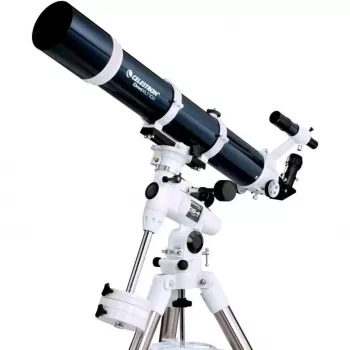
Hand-Figured Refractor Telescope with XLT Coatings and Manual EQ Mount: What to Expect at the Eyepiece
A hand-figured refractor paired with high-transmission coatings and a manual equatorial mount is built for crisp, high-contrast views and precise, hands-on tracking. The payoff shows up where the eye is most demanding: the Moon’s fine rilles near the terminator, subtle banding on Jupiter, and tight double stars that need clean diffraction patterns. Below is what those features typically mean in real observing—how the optics behave, how the mount feels, what the first night looks like, and who this style of telescope suits best.
What “hand-figured” means for refractor optics
“Hand-figured” refers to additional optical refinement intended to improve how accurately the lens surfaces match the desired curve and how smoothly they’re polished. In practical terms, better figuring usually aims for tighter control of spherical correction (how well the lens brings incoming light to a common focus) and reduced surface roughness that can scatter light.
At the eyepiece, a well-figured objective often shows up as a more decisive snap-to-focus, steadier contrast on delicate details, and more symmetrical star images when you rack through focus. These improvements become easiest to notice on high-magnification targets—especially the Moon, planets, and close double stars—when the atmosphere is calm enough to let the optics shine.
Even excellent optics can be held back by basics: mechanical alignment staying stable, the lens reaching thermal equilibrium with outdoor air, and the ever-changing quality of “seeing” (atmospheric steadiness). If you want a deeper overview of what tends to matter night to night, NASA’s observing guidance is a helpful reference: NASA Night Sky Network.
XLT coatings: brighter images and better contrast
Multi-layer anti-reflection coatings (such as XLT-style coatings) are designed to reduce light loss at each air-to-glass surface. Less reflection generally means higher overall transmission—so more of the collected light reaches your eye—and fewer internal reflections that can wash out fine contrast.
On deep-sky objects, higher transmission doesn’t turn a suburban sky into a dark site, but it can help brighter clusters and nebulae “stand out” a bit more against the background. On the Moon and planets, reduced reflections can increase perceived contrast, especially around bright edges like the lunar limb and the sharp light-to-dark boundary along the terminator.
Coatings deliver their best when the optics are clean and dry. Dew is the quiet contrast killer: once the objective starts fogging, the view softens quickly. Use a dew shield, and in humid regions consider gentle dew control rather than frequent lens cleaning. For background on how modern coating stacks are intended to work, see: Celestron Knowledgebase: Telescope Coatings.
Manual equatorial mount basics: why EQ is different from alt-az
An equatorial (EQ) mount is built around one key idea: align the right ascension (RA) axis with Earth’s rotation. When that axis is pointed near the celestial pole, you can track objects by moving primarily in one axis. At high magnification—where the Moon or a planet drifts quickly—this can feel dramatically more controlled than an alt-az mount that requires two-axis nudging.
Setup has a learning curve: leveling the tripod, aiming the polar axis, balancing the tube with counterweights, and adjusting slow-motion controls. The first night can feel unfamiliar, but the routine usually becomes fast once you’ve repeated it a few times. A straightforward overview of mount types and EQ fundamentals is available at Sky & Telescope (mount basics).
Best uses: lunar, planetary, double stars, and bright deep-sky
Setup and handling checklist (first night)
| Task | Why it matters | Quick tip |
|---|---|---|
| Level tripod and tighten hardware | Reduces vibration and drift | Keep legs shorter and use a firm stance |
| Rough polar alignment | Makes tracking easier and smoother | Aim polar axis toward Polaris; refine later |
| Balance both axes | Improves control and reduces stiction | Balance with the eyepiece you’ll use most |
| Test focus and diagonal orientation | Ensures comfortable viewing posture | Rotate diagonal to avoid neck strain |
| Dew control plan | Prevents fogged optics and lost contrast | Use a dew shield; add gentle heat if needed |
What affects image quality besides the telescope
Care, storage, and long-term reliability
Who this configuration fits best
In-stock picks to get started
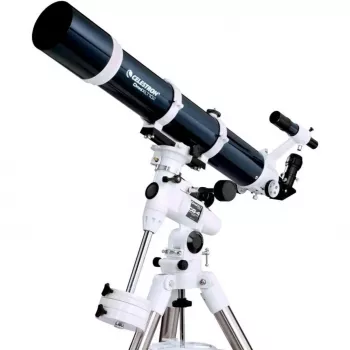
- Hand-Figured Refractor Telescope with XLT Coatings and Manual EQ Mount ($742.99)
- Premium Leather Strap for Apple Watch (49mm/45mm/44mm/41mm/40mm) ($4.97) — handy if you time cooldown, transit events, or simply want a comfortable outdoor strap.
- Corduroy Fabric Strap for Apple Watch ($13.01) — a softer option for longer observing sessions.
FAQ
Is a manual equatorial mount difficult to use at first?
There’s a real first-night learning curve: rough polar alignment and balancing the counterweights can feel unfamiliar. After a few sessions, tracking at high magnification often becomes easier than alt-az because you mainly follow the object along one axis. Practice by tracking a bright star at moderate power for a few minutes before moving to planets.
What do XLT coatings change in actual observing?
They reduce reflections and improve light transmission, which can translate to slightly brighter views and cleaner contrast—especially on bright targets like the Moon and planets. The gains are most noticeable when the lens is dry and free of dew, since fogged optics quickly erase contrast benefits.
What accessories make the biggest difference for visual observing?
A small set of comfortable eyepieces across low, medium, and higher power usually makes the biggest difference, along with a red flashlight and a practical dew solution in humid areas. If vibration is an issue at high power, simple damping measures can noticeably improve perceived sharpness by keeping the image steady.













Leave a comment