Find a Hobby with AI: Quick Micro-Trials That Stick
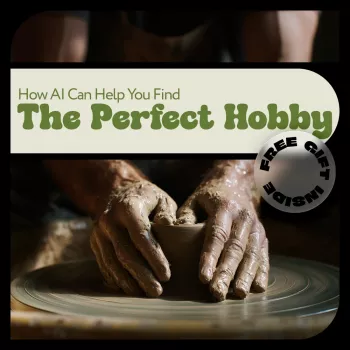
Choosing a Hobby with Less Guesswork (and More Follow-Through)
Choosing a hobby can feel overwhelming when interests are scattered, time is limited, or past attempts didn’t stick. AI tools can narrow the options by translating personality, routines, constraints, and curiosity into realistic hobby matches—then helping test those matches quickly with low-cost experiments. Instead of “picking the perfect thing” on day one, the goal is to run a few smart trials and let the best fit reveal itself through experience.
Why finding a hobby is harder than it sounds
Hobby hunting often stalls for reasons that have nothing to do with motivation. The biggest blocker is decision fatigue: too many appealing options turns research into endless scrolling, and starting never happens. On top of that, interests naturally shift with life stage, energy levels, budget, and available time—so a hobby that would have worked two years ago may feel mismatched today.
There’s also the “online illusion.” An activity can look inspiring in a video, but still clash with your real preferences: solitude vs. community, structure vs. freedom, or physical vs. mental effort. Finally, early friction matters. Equipment, a steep learning curve, and scheduling hassles can make a potentially great match feel like a bad one before you’ve even reached the fun part.
What AI adds beyond traditional hobby quizzes
Traditional quizzes are usually static: you answer a fixed set of questions, get a score, and that’s it. AI can work more like a guided conversation. With adaptive questioning, follow-ups change based on your answers, so the system can clarify what you mean by “creative,” “relaxing,” or “social.”
AI can also be context-aware. Recommendations can factor in your schedule, location, climate, commuting limits, and constraints like noise tolerance or available space. And because it can iterate, you’re not stuck with a one-time result: after a couple of quick trials, you can report what felt good (or annoying) and get a refined shortlist.
One of the most useful upgrades is planning support. Turning “try watercolor” into a first-week plan, a minimal shopping list, and a beginner learning path lowers the activation energy—often the difference between “someday” and “this weekend.”
A simple AI-based hobby discovery workflow
Step 1 — Capture signals
Start with evidence, not aspirations. List recent moments of flow, topics you keep saving or watching, and tasks that feel satisfying. The APA describes flow as a state of complete absorption in an activity; noticing where you naturally slip into that state is a strong clue about fit (APA Dictionary of Psychology: Flow).
Step 2 — Define constraints
Write down what your hobby must respect: weekly time, budget, space, noise rules, and whether you want it social or solo. Constraints don’t limit you; they protect you from choosing something you can’t repeat.
Step 3 — Generate candidates
Ask for 10–20 options categorized by cost and effort level. Include “boring but repeatable” ideas alongside “exciting and new.” Repeatable wins long-term.
Step 4 — Shortlist
Pick 3–5 options that match constraints and feel genuinely intriguing. If you’re stuck, eliminate anything that requires major purchases or complicated scheduling for the first month.
Step 5 — Run micro-trials
Do 30–90 minute starter sessions using minimal equipment or free resources. Treat each trial like a test drive, not a commitment.
Step 6 — Score and reflect
Rate enjoyment, friction, and curiosity to continue; then feed results back for refinement. This loop is where AI becomes most helpful: it can adjust recommendations based on what you actually did, not what you imagined you’d like.
| Metric | What to rate | 1 (Low) to 5 (High) |
|---|---|---|
| Enjoyment | Did the activity feel rewarding while doing it? | 1–5 |
| Curiosity | Is there a pull to learn more afterward? | 1–5 |
| Friction | How annoying were setup, tools, and logistics? | 1–5 (reverse: 1=easy, 5=hard) |
| Energy fit | Did it match your typical energy level? | 1–5 |
| Lifestyle fit | Can it realistically fit your schedule and space? | 1–5 |
Examples of AI hobby “interest tests” that work
Some tests are especially effective because they turn vague preferences into clear attributes and next actions:
Questions that help AI recommend hobbies you’ll actually try
As you refine your questions, it helps to remember that AI outputs are recommendations, not guarantees. Many public resources emphasize responsible use and human oversight in AI-driven decisions (OECD: Artificial Intelligence (AI) policy and overview).
Avoiding common pitfalls when using AI for personal recommendations
A guided way to turn AI insights into a lasting hobby
Helpful tools to support your hobby testing
- How AI Can Help You Find the Perfect Hobby | Smart eBook Guide for structured worksheets, prompts, and step-by-step micro-trials.
- Corduroy Fabric Strap for Apple Watch if you’re tracking new movement-based hobbies comfortably day to day.
- Premium Leather Strap for Apple Watch for a simple upgrade when you want a more classic look while you build consistency with walks, hikes, or fitness classes.
FAQ
Can AI really recommend a hobby that fits my personality?
Yes, but it works best as a hypothesis engine: it uses your preference signals and constraints to suggest matches, then improves accuracy when you run micro-trials and report what felt enjoyable or frustrating.
What if I don’t have much free time or money to start a hobby?
Filter aggressively for low-cost, low-setup options and run 10–20 minute sessions for a week. Many hobbies can be tested with free tutorials and household items before you spend anything.
How do I know whether to stick with a hobby or move on?
Give it a 1–2 week evaluation window and score enjoyment, curiosity, and friction after each session. If enjoyment is decent but friction is high, iterate to a nearby alternative (different format, shorter sessions, simpler tools) rather than quitting entirely.














Leave a comment