Golden Ceramic Round Sink: Faucet, Drain & Care Tips
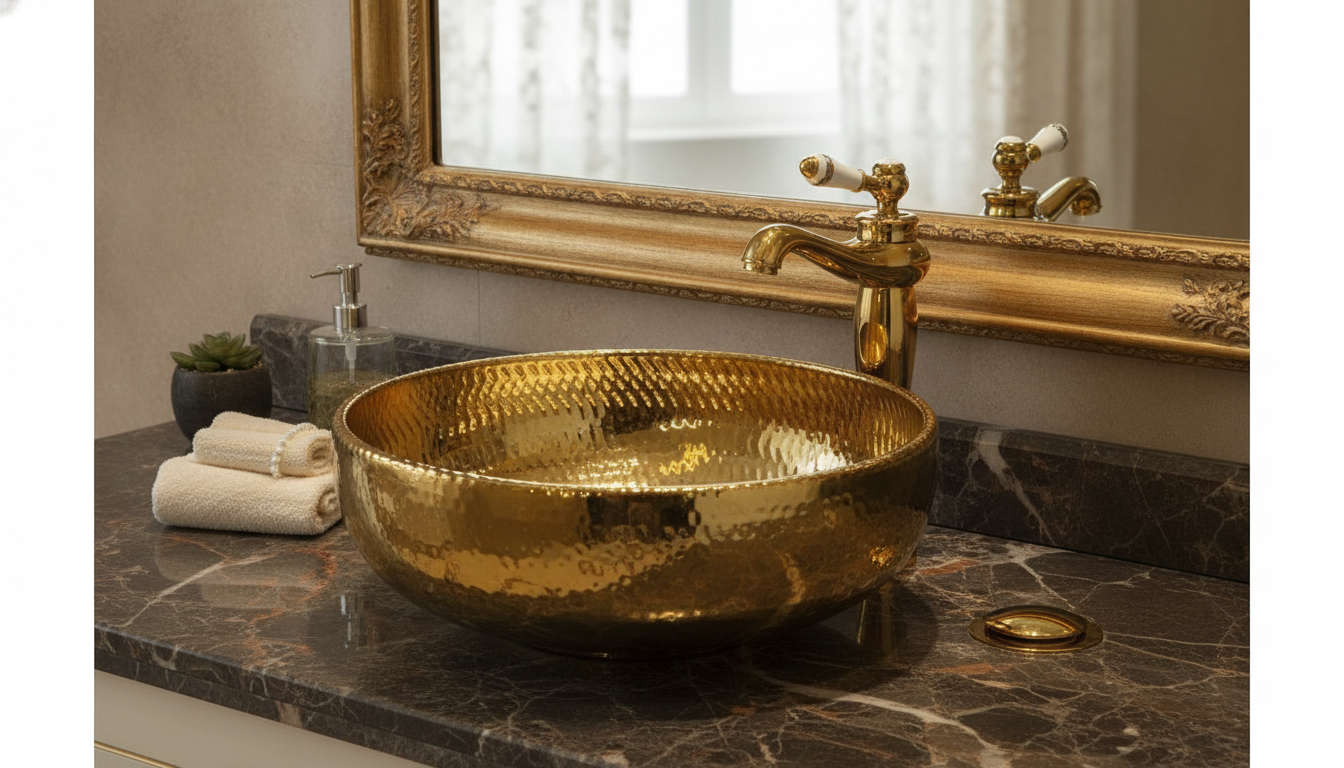
Golden Ceramic Round Bathroom Sink: Warm Metallic Style in a Clean Round Form
A round ceramic basin with a golden finish can shift a bathroom from plain to polished without changing the entire layout. The soft circle shape reads intentional (not bulky), while the warm metallic exterior adds depth next to common vanity materials like wood, stone, and crisp white surfaces. Below are practical things to check before buying, pairing tips for faucets and drains, installation notes, and simple care habits that keep the finish looking sharp.
What Makes a Golden Ceramic Round Sink Stand Out
Round basins are a favorite for bathrooms where you want the vanity to feel lighter. With fewer corners, the silhouette visually “softens” straight cabinet lines and can make compact spaces—like powder rooms—feel more open.
- Round silhouette, easy flow: A circular bowl helps tight layouts feel less angular and more boutique-hotel than builder-basic.
- Warm metallic impact: Gold brings warmth that pairs naturally with walnut and oak, but also looks clean against white tile, creamy stone, and matte neutral palettes.
- Glazed ceramic practicality: Properly glazed ceramic is non-porous, so everyday residue tends to sit on the surface instead of soaking in—ideal for quick wipe-downs.
- High-style focal point: A statement basin can carry the whole countertop, letting you keep the mirror and lighting simple instead of over-decorating.
Quick Specs Snapshot
Golden ceramic round sinks typically work best in contemporary, modern classic, and boutique-inspired bathrooms. Most are used as vessel-style basins on top of a vanity, but placement depends on how your counter is drilled and which drain setup you’re using.
- Best suited for: contemporary, modern classic, and boutique-hotel inspired bathrooms.
- Works with: single-hole or widespread faucets depending on countertop drilling and faucet choice.
- Common placements: on top of a vanity (vessel style) or on a counter with a compatible drain opening.
At-a-glance buying checklist
| Feature | Why it matters | What to confirm before ordering |
|---|---|---|
| Installation style | Determines countertop cutout and faucet height | Vessel vs. drop-in/undermount requirements and included hardware |
| Drain compatibility | Prevents leaks and finish damage | Drain size, overflow presence, and whether a grid drain is preferred |
| Faucet reach & height | Avoids splashing and awkward hand clearance | Spout height and projection relative to bowl depth and centerline |
| Countertop clearance | Ensures usable space and stable seating | Bowl diameter plus room for soap, tray, and faucet base |
| Finish care | Maintains the golden look long-term | Cleaner type allowed; avoid abrasives and harsh acids |
Choosing the Right Faucet and Drain Pairing
A round vessel sink looks straightforward, but the faucet and drain details are what determine whether it feels luxurious or frustrating day-to-day.
- Faucet height: Vessel basins usually need a taller faucet for comfortable hand clearance. However, extra height can increase splash if the stream hits the slope near the rim.
- Spout reach: Aim for water to land near the center of the bowl. If the stream hits the sidewall, you’ll see more overspray and faster mineral buildup.
- Drain finish: A matching gold drain reads seamless and “designed.” A contrasting drain (matte black, brushed nickel) can make the basin feel more sculptural.
- Overflow compatibility: If the sink has no overflow, use a non-overflow drain. If it has an overflow channel, use an overflow-compatible drain so water can route correctly.
For water-use considerations when selecting a faucet, the EPA’s WaterSense program is a helpful reference for efficiency and performance expectations.
Styling Ideas for a Warm, High-End Look
The easiest way to make a golden ceramic sink look expensive is to keep the surrounding elements calm and intentional. Let the basin be the “jewelry,” and avoid competing patterns on every surface.
- Hardware pairings: Choose matte black or brushed nickel for crisp contrast, or brushed gold for a coordinated metallic suite.
- Mirror + lighting: A thin, simple mirror frame keeps the countertop from feeling busy. Add one warm light source—like a sconce—to echo the golden tone.
- Countertops that flatter gold: White quartz, creamy marble-look slabs, walnut, oak, and warm-gray concrete-style surfaces all complement gold without turning yellow.
- Minimal accessories: Stick to one soap dispenser, one small tray, and a single greenery element for a clean vignette.
Installation Notes to Avoid Common Issues
Most “sink problems” show up at the install stage: off-center placement, the wrong faucet proportions, or drain fittings tightened too aggressively against ceramic. A few careful steps prevent the common headaches.
Care and Cleaning for Golden Ceramic Finishes
For general household cleaning and surface hygiene best practices, see the CDC’s guidance on cleaning and disinfecting and follow product labels for compatibility.
Product Options Available Now
- Golden Ceramic Round Bathroom Sink — a compact focal point that brings warm metallic style to a clean round form.
- Corduroy Fabric Strap for Apple Watch — a soft, textured accessory that complements warm-toned routines and getting-ready spaces.
FAQ
Is a golden ceramic sink difficult to keep clean?
No—glazed ceramic is typically easy to maintain with mild soap and a soft cloth. Rinse well to prevent residue film, and avoid abrasive pads or harsh acids that can scratch or dull the finish. In hard-water areas, wiping dry after use helps prevent spots.
Will a round vessel sink cause more splashing?
It can if the faucet is too tall, the flow rate is high, or the spout reach sends water onto the slope near the rim. A spout that lands the stream near the center of the bowl—paired with a sensible flow rate—usually keeps splash under control.
What drain type should be used with a ceramic vessel sink?
Match the drain to whether the sink has an overflow: non-overflow drains for bowls without an overflow channel, and overflow-compatible drains when an overflow is present. Use the correct gaskets and avoid overtightening against ceramic to reduce leak risk and stress on the bowl.















Leave a comment