Remove Tree Sap From Car Paint Without Scratching
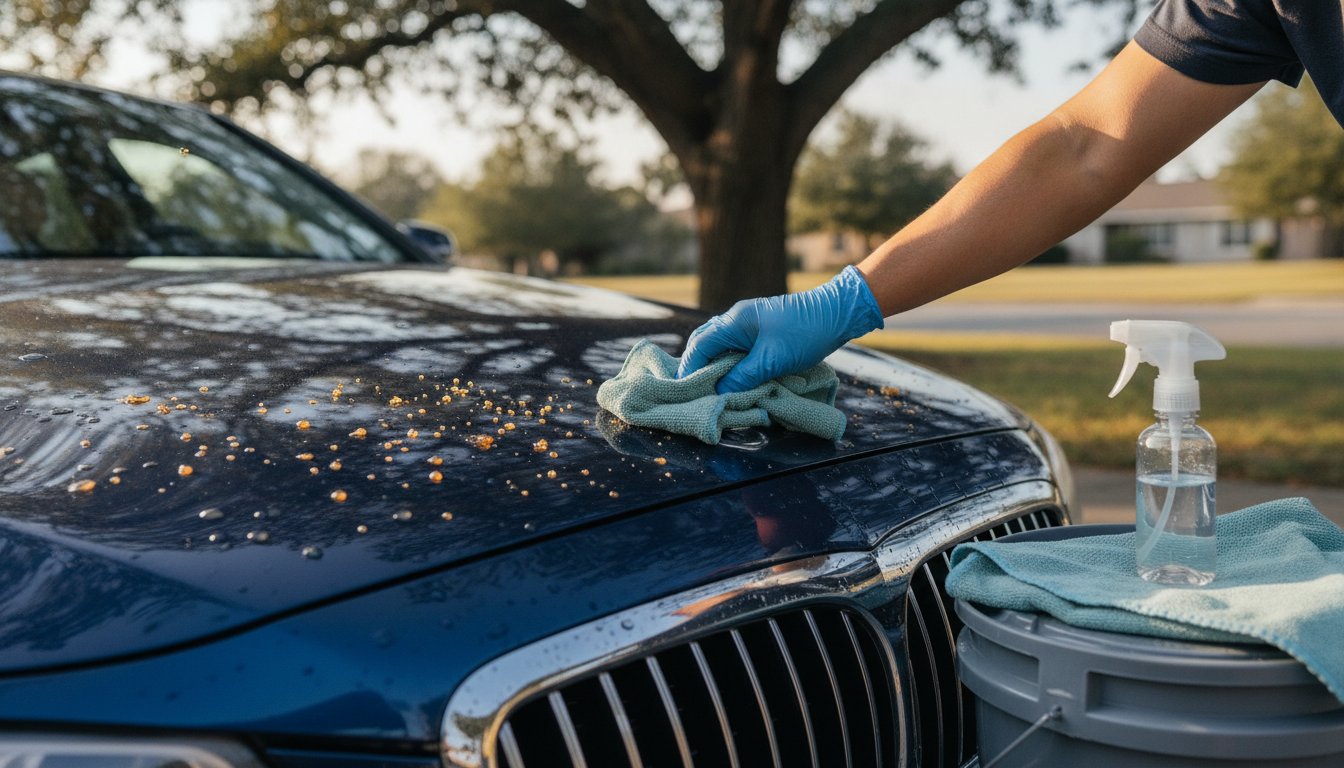
Remove Tree Sap Safely: How to Get Sap Off Car Paint Without Damage
Tree sap bonds quickly to clear coat, especially in heat and direct sun. The safest removal approach is gentle, staged, and paint-aware: start with washing and softening, move to controlled solvents only as needed, and finish with protection to reduce re-bonding and staining.
What tree sap does to paint (and why speed matters)
Fresh sap is mostly a sticky surface contaminant; once it cures, it hardens, traps grit, and can leave behind staining or etching in the clear coat. Heat accelerates bonding and curing, and working in direct sun increases the chance of marring because the surface dries faster and the resin becomes more stubborn. The biggest mistake is dragging dry sap across paint—always soften and add lubrication first. If sap has been sitting for weeks, the “spot” you see afterward is often not leftover sap but a clear-coat stain that needs polishing rather than more aggressive rubbing.
Before touching the spot: a quick safety checklist
- Work in shade on cool paint; avoid panels that feel hot to the touch.
- Rinse loose grit first so you don’t grind dirt into the clear coat.
- Use clean microfiber towels; retire any towel that hits the ground.
- Test any chemical on a hidden area (like a lower rocker panel) before using it on a visible panel.
- Avoid abrasive pads, razor blades, and dry wiping—these are the most common causes of scratches.
Tools and supplies that keep paint safe
- pH-balanced car shampoo, a wash mitt, and a safe rinse source (hose or pressure washer on a gentle setting).
- Detail spray/quick detailer for lubrication during spot work.
- Clay bar or synthetic clay towel (only after most sap is removed, and used gently).
- Isopropyl alcohol (IPA) diluted with water (commonly 10–25% IPA) for controlled spot cleaning.
- Citrus-based tar/sap remover or dedicated bug-and-tar remover made for automotive clear coat.
- Multiple microfiber towels, nitrile gloves, and a soft foam applicator.
- Optional: wax/sealant or ceramic spray for aftercare; a mild finishing polish for staining.
If you want a detailed, printable walkthrough (plus quick-reference prompts for tricky scenarios), see Remove Tree Sap Safely – A Complete Guide on how to get tree sap off car paint. For timing dwell steps without hovering over the panel, a comfortable watch band can help—premium leather strap for Apple Watch is an easy swap before a longer wash day.
Paint-safe removal method (step-by-step)
Step 1 — Wash the panel
Use car shampoo and plenty of water to remove grit around the sap. This reduces the chance of rubbing contaminants into the clear coat while you work.
Step 2 — Soften first
Hold a warm (not hot) damp microfiber on the sap for 30–60 seconds. Re-wet and repeat. The goal is to soften the resin so it releases without force.
Step 3 — Lift, don’t scrub
Spray detailer for lubrication and gently wipe in one direction. Use light pressure, flip the towel often, and switch to a fresh towel as soon as it starts to feel grabby.
Step 4 — Escalate to a dedicated remover (only if needed)
Apply a small amount of a paint-safe tar/sap remover to a microfiber or foam applicator. Dab it onto the spot, let it dwell per the label, then wipe lightly. Repeat short cycles rather than increasing pressure.
Step 5 — Use diluted IPA only for residue
Step 6 — Re-wash the spot
Step 7 — Inspect under good lighting
Solvent options and what to avoid
When sap won’t budge, the safest escalation is still controlled and paint-specific. Start mild, step up only as needed, and avoid household solvents that can soften or haze clear coat. For background on why resins can be so persistent (and why they cure harder with heat), the U.S. Forest Service has helpful context on plant exudates: U.S. Forest Service. For general best practices on washing and minimizing marring during car care, see: International Carwash Association – Car Care Resources.
| Option | Best For | Risk Level | Notes |
|---|---|---|---|
| Warm damp microfiber + detail spray | Fresh sap and initial softening | Low | Use gentle pressure; repeat cycles rather than scrubbing |
| Dedicated bug/tar/sap remover | Cured sap and heavy spots | Low–Medium | Follow label dwell time; re-wash after use |
| Diluted isopropyl alcohol (10–25%) | Sticky residue after main removal | Medium | Spot-use only; avoid soaking trim; re-protect afterward |
| Clay bar (with plenty of lubricant) | Remaining bonded residue after softening | Medium | Can mar if used dry or on heavy contamination; polish if needed |
| Acetone / lacquer thinner / gasoline | Not recommended | High | Can damage clear coat and plastics; skip |
Special cases: cured sap, matte paint, wraps, and coated cars
If a stain or dull spot remains after sap removal
Aftercare: restore protection and reduce re-sticking
Prevention tips that actually help
When professional help is the better choice
FAQ
Will rubbing alcohol damage car paint when removing sap?
Diluted isopropyl alcohol used briefly on a small spot is typically safe on modern cured clear coat, but high concentrations, heavy pressure, and repeated wiping can haze sensitive finishes or dry surrounding trim. Test first, use light passes, then re-wash and re-protect the area.
What if tree sap has already hardened on the paint?
Start with repeated warm, damp compress cycles and plenty of lubrication, then use a dedicated tar/sap remover with the label’s dwell time and gentle wiping. Avoid scraping, and expect that any remaining “shadow” may be staining that needs mild polishing.
Can a clay bar remove tree sap safely?
Yes—clay can remove leftover bonded residue after the sap is mostly softened and lifted, but only with lots of lubricant and very light pressure. Because clay can leave micro-marring, a quick finishing polish may be needed afterward on darker paints.















Leave a comment