Indoor Natural Gas Tankless Water Heater: 7.5 GPM Guide
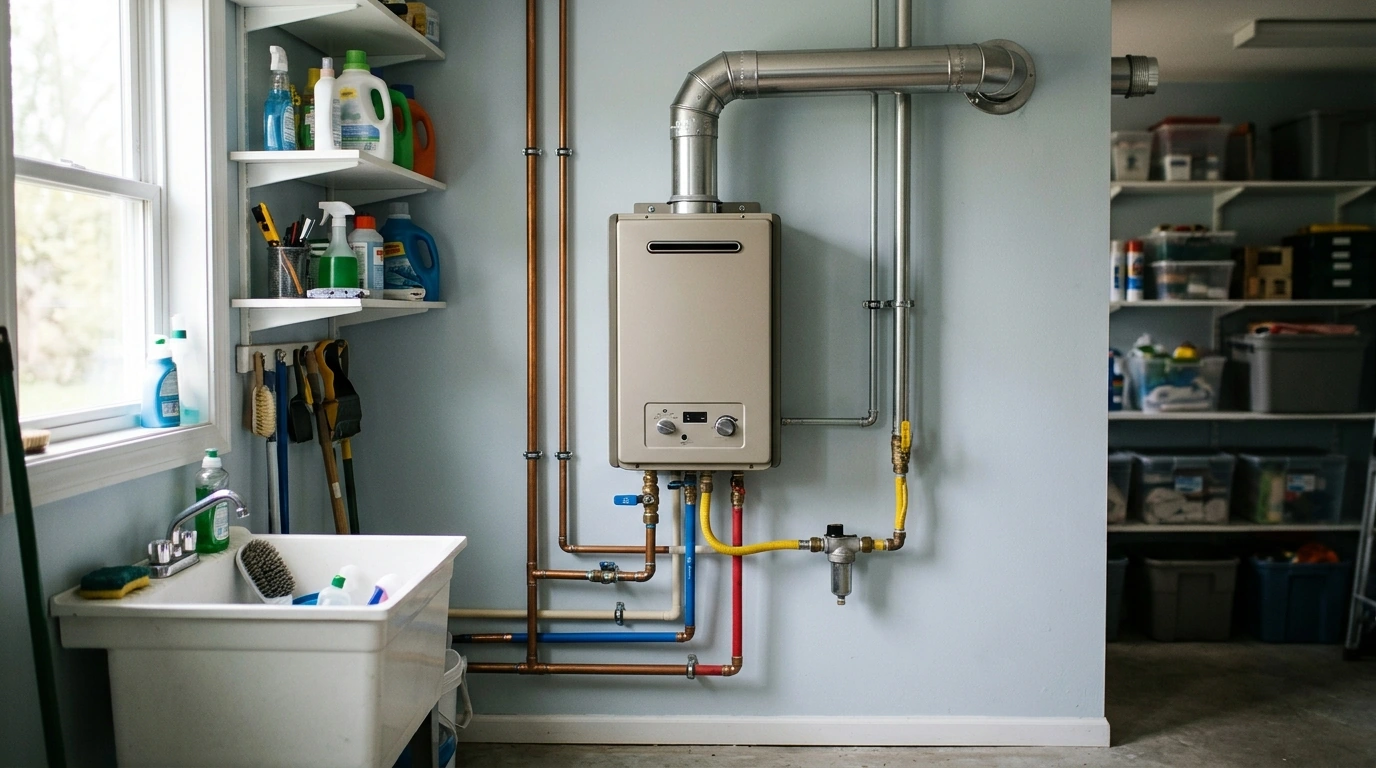
An indoor natural gas tankless water heater can be a practical choice if you want to heat water on demand rather than keep a storage tank hot. Our 7.5 GPM, 170,000 BTU model gives you two useful starting points for evaluating capacity, but neither number guarantees the same performance in every home. Your incoming water temperature, simultaneous fixture use, and installation conditions all matter. For more guidance, see 5 Factors for Tankless Water Heater Installation.
What This Heater Offers
Our Natural Gas Tankless Water Heater, 7.5 GPM is designed for indoor installation and uses natural gas to heat water as it flows through the unit. Unlike a conventional storage water heater, a tankless system does not maintain a tank full of heated water while you wait to use it. For further reading, see Rheem RTG-70DVLN-3 Tankless Natural Gas Water Heater.
The listed price is $839.80. You can visit the product page for current availability before making your plans.
Product at a Glance
| Feature | Listed specification |
|---|---|
| Fuel | Natural gas |
| Installation location | Indoor |
| Flow rating | 7.5 GPM |
| Heating input | 170,000 BTU |
| Listed price | $839.80 |
On-demand heating can help you avoid maintaining a large supply of stored hot water, but it does not eliminate the need to size the heater for your household. The U.S. Department of Energy’s guide to tankless water heaters provides an overview of how these systems work and the factors that affect their use.
Understanding 7.5 GPM and 170,000 BTU
Gallons per minute, or GPM, describes water flow. A 7.5 GPM rating is a useful comparison point, but the hot-water flow available at your preferred temperature depends on how much the heater must raise the temperature of the incoming water.
For example, if water enters your home at 50°F and you want it delivered at 120°F, the required temperature rise is 70°F. If incoming water is warmer, the required rise is smaller. Colder incoming water generally means less flow can be heated to the same output temperature at once.
BTU describes heating input. The listed 170,000 BTU figure refers to the unit’s input, not a direct measure of heat delivered to the water. Some energy is lost during operation, so input alone does not tell you exactly how much hot water will reach your fixtures. Use the unit’s performance information for the temperature rise you expect rather than treating the maximum flow rating as an all-season promise.
Match Hot-Water Demand to Your Household
Start by listing the fixtures and appliances that you expect to use at the same time. A morning shower while someone runs the kitchen faucet, for example, creates a different demand from using either fixture on its own. Add the flow rates of the simultaneous uses to estimate the hot-water flow your household needs.
Next, consider your local incoming water temperature and the output temperature you want. Incoming water can be colder in winter, so a system that comfortably handles demand in a warmer season may have less capacity at the same delivery temperature when the weather changes. The Department of Energy’s water-heater sizing guidance explains how flow rate and temperature rise work together.
If your estimated demand approaches 7.5 GPM, or if your incoming water temperature varies substantially through the year, consult a qualified installer. Our team recommends discussing your busiest realistic use pattern rather than sizing around a single faucet. An installer can help you compare that demand with the unit’s performance at the temperature rise your home requires.
Plan for Indoor Installation
Before you purchase, have a qualified professional assess your natural gas supply, venting, combustion air, clearances, electrical needs, and applicable local codes. An indoor gas appliance needs an installation planned around its specific requirements; the available space alone does not establish that a location is suitable.
Replacing an existing water heater may also involve changes to gas piping or venting. Do not assume that the current gas line or vent can serve the new unit simply because it served the old one. The installer can determine whether the existing setup is compatible and identify any work needed before installation.
Confirming those requirements ahead of time helps you account for the full project, not just the heater’s purchase price. It also gives you an opportunity to discuss where the unit will go and how its location relates to the fixtures you use most.
Everyday Use and Upkeep
Tankless heating happens on demand, but hot water still has to travel through your plumbing. A faucet far from the heater may take time to receive hot water, and the water already sitting in the pipe must move through first. Keep that distinction in mind if quick delivery at a particular fixture is important to you.
Follow the manufacturer’s maintenance instructions and ask your installer about local water hardness and descaling needs. Mineral buildup can affect water-heating equipment, so a maintenance plan suited to your water conditions is worth discussing from the start.
When you are ready to review the unit, visit our indoor natural gas tankless water heater product page.
More From Our Store
Shopping for something else? We also carry a Corduroy Fabric Strap for Apple Watch, a separate accessory unrelated to water-heater installation.
FAQ
Does 7.5 GPM mean this heater always delivers 7.5 gallons of hot water per minute?
No. Available hot-water flow depends on the temperature rise needed and operating conditions, including the temperature of the incoming water.
Can an indoor natural gas tankless water heater use existing venting?
Existing venting should not be assumed suitable. A qualified installer should assess it against the unit’s requirements and local codes.
Will hot water reach the faucet instantly?
The heater heats water on demand, but delivery time also depends on the distance and plumbing between the unit and the fixture.













Leave a comment