L-Shaped Triple Bunk Bed: Desk, Stairs & Wardrobe
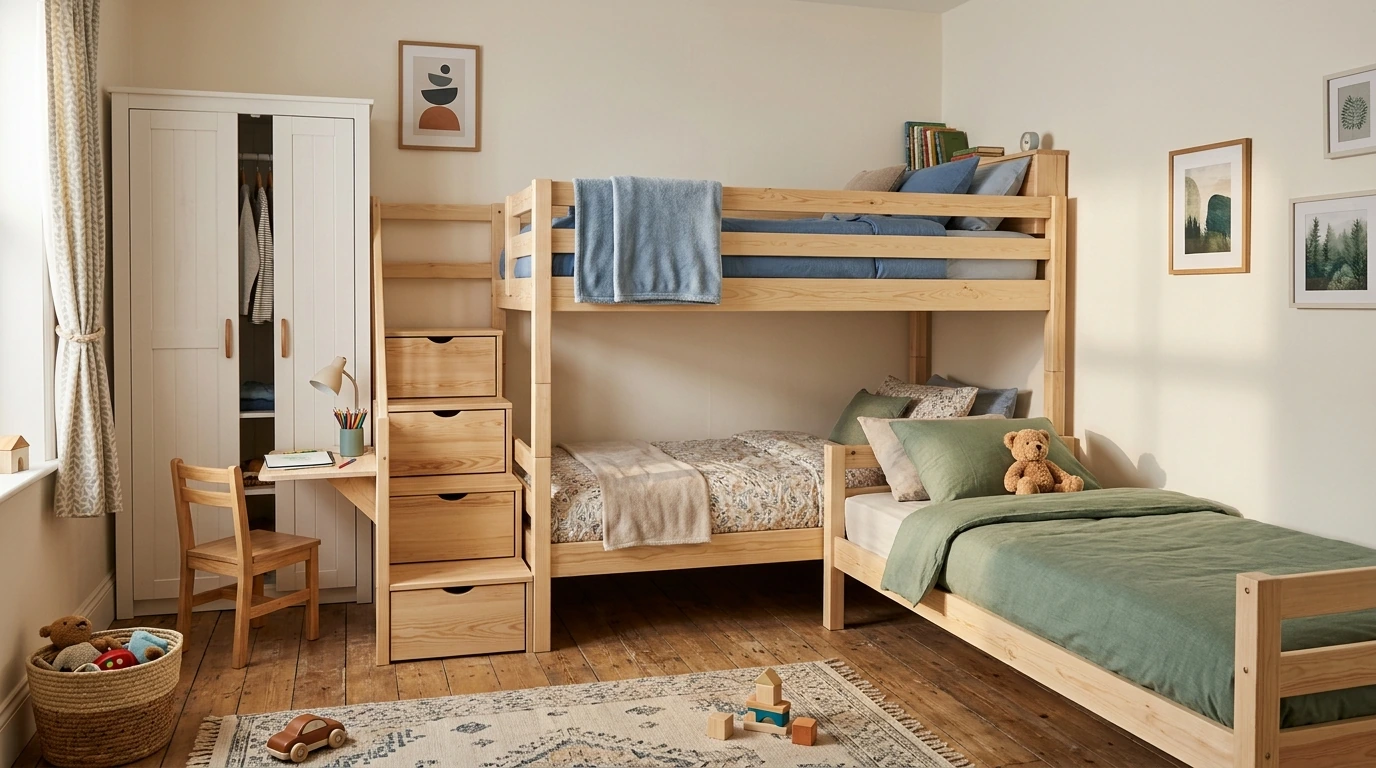
Space-Saving L-Shaped Triple Bunk Bed with Desk, Stairs, Wardrobe, and Storage: One Room, Three Sleep Zones, and a Built-In Study Spot
When a shared bedroom has to do everything—sleep, study, store clothing, and keep floor space open—one large, well-planned piece can simplify daily routines. Our Space-Saving L-Shaped Triple Bunk Bed with Desk, Stairs, Wardrobe, and Storage is designed to combine three sleeping areas with a dedicated desk, easy-access stairs, and organized storage so the room stays functional from morning to bedtime.
What this bed setup solves in a busy bedroom
If you’re trying to make one bedroom work for multiple kids (or frequent sleepovers), the biggest challenge is avoiding “pile-ups”—clothes on chairs, backpacks on the floor, and homework migrating to the kitchen. This configuration helps by:
- Creating three distinct sleep spaces in a single footprint, so siblings can share a room without it feeling like wall-to-wall mattresses.
- Adding a built-in desk zone so homework, reading, and creative time have a consistent home.
- Turning vertical space into usable storage with an integrated wardrobe and storage sections.
- Using an L-shaped layout that opens up the center of the room for play, dressing, or a clear walking path.
- Keeping daily essentials close—pajamas, school supplies, and linens—so cleanup takes minutes instead of a full reset.
How the L-shaped layout helps rooms feel larger
An L-shape is often easier to live with than a long, straight bunk profile. By tucking into a corner, the bed can free up uninterrupted wall space while naturally separating “sleep” and “study/storage” areas. That separation matters in real life: fewer items drift across the room when each activity has a defined zone.
- An L-shape typically works well in corners, leaving more uninterrupted wall length for dressers, bookcases, or hooks.
- It separates zones naturally: sleep in one direction, study/storage in the other, which reduces visual clutter.
- It can improve traffic flow compared to long, straight bunk designs that block doors, closets, or windows.
- It supports flexible placement: the desk area can become a “quiet corner,” while the open floor stays available for shared use.
Quick room-planning checklist
| Measure | Why it matters | Tip before ordering |
|---|---|---|
| Ceiling height | Helps ensure comfortable clearance for top bunks | Confirm there’s headroom for sitting up and safe guardrail clearance |
| Wall lengths (two sides) | Determines how the L-shape fits | Map the bed on paper with door swing and window placement |
| Door/closet access | Prevents daily bottlenecks | Leave a clear path for drawers, wardrobe doors, and stairs |
| Outlet locations | Supports desk lighting/charging | Plan a desk lamp and cable routing before setup |
| Floor space goal | Defines what you want to keep open | Decide what gets removed (extra desk, extra wardrobe) after installation |
Built-in desk: a daily-use zone that stays ready
A desk that’s part of the furniture (instead of a separate piece you squeeze in later) makes it easier to keep schoolwork and creative projects contained. The goal is “ready-to-use” rather than “clear a space first.”
- A dedicated desk space encourages routines: homework, reading, crafting, or computer time in one consistent spot.
- It pairs well with simple organization habits—one bin for stationery, one for notebooks, one for electronics.
- Task lighting matters: plan a lamp and keep charging cords routed so they don’t cross walking paths.
- If the room is shared, setting “desk hours” and “quiet hours” prevents conflicts and keeps the desk usable for everyone.
Stairs, wardrobe, and storage: built-in organization that reduces clutter
When kids share a room, storage only works if it’s easy to access daily. Stairs can make climbing feel more stable than a ladder routine, especially during bedtime when kids are tired and the lights are low. A built-in wardrobe can also reduce the need for extra furniture, which helps your floor stay open.
- Stairs can be a practical upgrade for everyday climbing and for carrying bedding.
- A built-in wardrobe helps consolidate clothing storage—fewer freestanding units means more open floor space.
- Storage areas are ideal for bedding, off-season clothing, backpacks, toys, or shared desk supplies.
- Assign each sleeper a labeled storage zone to prevent mix-ups and speed up morning routines.
Safety and everyday setup habits that matter
Your routines matter as much as the furniture. Our team recommends setting expectations from day one—where play happens, how you use the stairs at night, and how you keep the top bunks clear.
For broader bunk bed safety guidance, you can also review resources from the U.S. Consumer Product Safety Commission (CPSC) and the ASTM F1427 bunk bed safety specification.
Who this configuration fits best
Making it feel finished: simple styling that keeps the room calm
More in-stock picks from our store
- Space-Saving L-Shaped Triple Bunk Bed with Desk, Stairs, Wardrobe, and Storage
- Corduroy Fabric Strap for Apple Watch
- milanese-magnetic-stainless-steel-band-for-apple-watch
FAQ
What should be measured before choosing an L-shaped triple bunk bed with desk and storage?
Measure ceiling height, the two wall lengths where the L will sit, and the clearance you need for door swings and closet access. Also note outlet locations for desk lighting/charging and confirm you’ll still have a safe walking path around the stairs and storage areas.
Are stairs better than a ladder for a triple bunk setup?
Stairs can make everyday climbing feel steadier and can be easier when you’re carrying blankets or helping younger kids at bedtime. Keep the steps clear, add a small nightlight nearby, and treat the stairs as a “walk, don’t play” zone.
How can three kids share this setup without the room feeling messy?
Give each child a dedicated, labeled storage section and keep the desktop limited to true daily essentials. A quick weekly reset—laundry put away, bins re-sorted, papers cleared—prevents clutter from becoming the default.











Leave a comment