Booster Seat Safety Rules: Belt Fit, Best Practices
Your Parent’s Guide to Booster Seat Safety: Essential Rules for Safer Car Rides
Booster seats work best when the little details are done right—belt fit, seating position, and everyday habits. Our team built this guide for busy parents who want clear rules you can actually follow on school runs, weekend trips, carpools, and everything in between. Use it to tighten up routines, spot common mistakes fast, and feel confident that the seat belt is protecting your child the way it’s meant to.
Start With the Goal: Make the Adult Seat Belt Fit a Child
A booster’s job is simple: it positions the adult lap-and-shoulder belt so it lands on the strongest parts of your child’s body. “Almost right” belt fit isn’t the target—correct fit is.
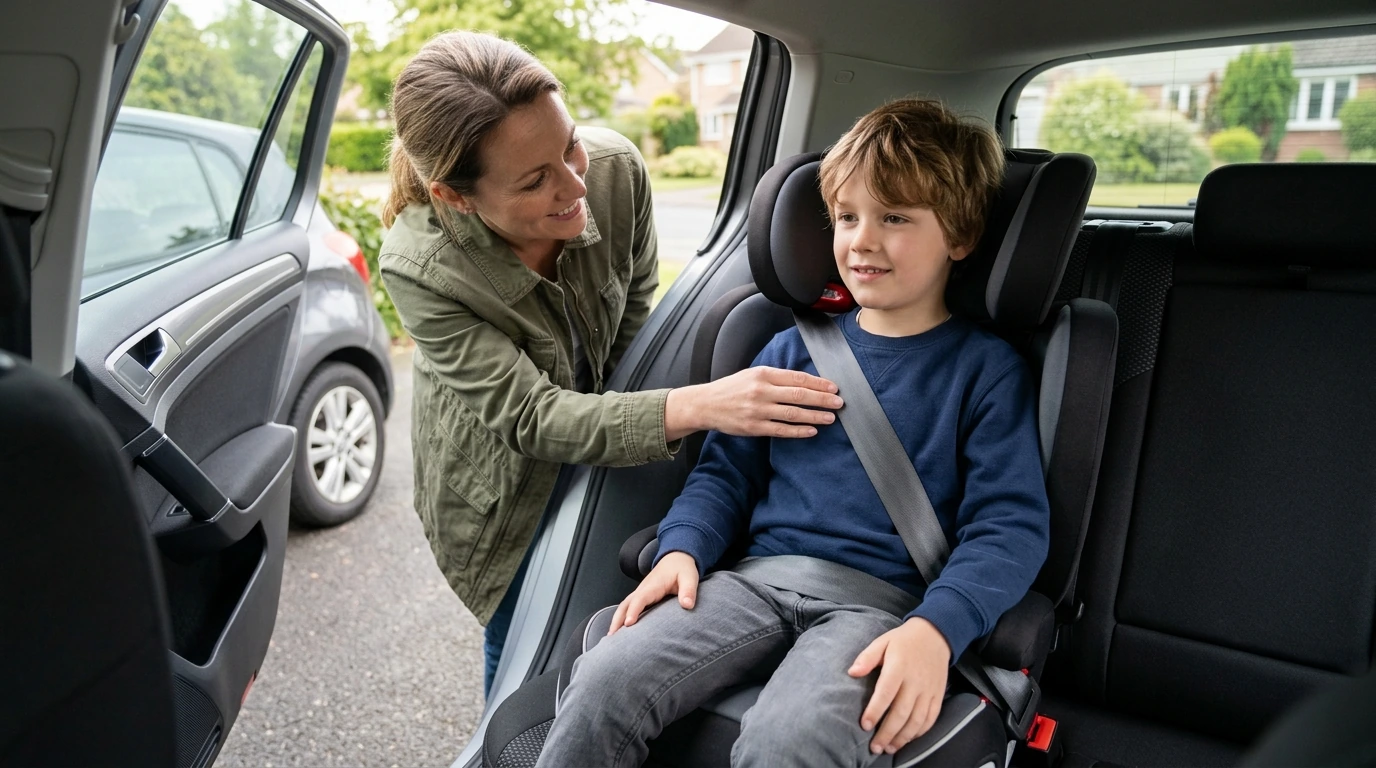
- Lap belt: low and snug across the upper thighs/hips, not on the soft belly.
- Shoulder belt: across the center of the chest and on the shoulder, not cutting into the neck and not slipping off the shoulder.
- No shortcuts: never tuck the shoulder belt behind the back or under the arm; it removes crucial upper-body protection.
- Adjust until it’s right: change the booster position, use the belt guide correctly, and adjust the vehicle headrest if needed so the shoulder belt tracks cleanly.
| Belt area | Correct placement | Red flags to fix |
|---|---|---|
| Lap belt | Low on hips/upper thighs, snug | On belly, riding up, loose |
| Shoulder belt | Across mid-chest and shoulder | On neck/face, off shoulder, behind back/under arm |
| Child posture | Back against vehicle seat, sitting upright | Slouching, leaning, twisting to reach toys |
Choose the Right Booster Style for the Situation
The “right” booster is the one that delivers consistent belt fit in the vehicle(s) your child rides in most—and that your child can use correctly every time.
- High-back boosters: often make belt positioning easier and add head/side support, especially in vehicles with lower seat backs or limited head support.
- Backless boosters: typically more portable and can work well when the vehicle provides adequate head support and the shoulder belt naturally fits correctly.
- Match the booster to the child: stay within the manufacturer’s size limits and confirm the belt geometry works in your car (the same booster can fit very differently from vehicle to vehicle).
Everyday Rules That Prevent the Most Common Mistakes
Most booster-seat issues aren’t “big” errors—they’re small, repeatable habits that change belt fit mid-ride. These rules prevent the most common slip-ups.
- Back all the way up: your child’s back stays against the vehicle seat. Slouching can push the lap belt onto the abdomen.
- Shoulder belt stays put: on the shoulder for the entire ride—no exceptions for short trips, sleepy rides, or “it’s uncomfortable today.”
- No thick winter coat under the belt: buckle over thin layers, then place the coat on backward like a blanket if needed.
- Keep the belt untwisted: twists reduce belt surface area and can increase injury risk.
- Buckle check before you roll: especially when multiple kids climb in at once.
Where the Booster Goes in the Car (and Why It Matters)
Seating position can make belt fit easy—or frustrating—before you even start.
- Back seat is preferred: it reduces exposure to front-seat airbags and many front-impact forces.
- Pick the spot with the best repeatable fit: center positions can be great when shoulder belt fit is solid, but many vehicles fit best on the outboard seats.
- Avoid “built-in” fit problems: if a seating position consistently rubs your child’s neck or the shoulder belt slips off, switch positions or booster style rather than fighting it every trip.
- Carpools need a quick verification: check belt routing and shoulder belt alignment in each vehicle—don’t assume it’s identical.
A Fast, No-Guesswork Checklist for Each Ride
Consistency beats perfection. Use a quick routine you can repeat on hectic mornings.
When to Move On From the Booster (and When Not To)
Keep Your Setup Reliable: Cleaning, Wear, and Replacement Basics
Use the Digital Guide to Build a Simple Family Routine
- Your Parent’s Guide to Booster Seat Safety (digital guide) — an easy, phone-friendly set of essential rules for safer car rides.
- Corduroy Fabric Strap for Apple Watch — helpful if you use timed reminders for buckle checks or carpool routines.
- Premium Leather Strap for Apple Watch — another comfortable option for parents who keep safety checklists and reminders on-wrist.
Authoritative safety resources (worth bookmarking)
- NHTSA — Car Seats and Booster Seats
- American Academy of Pediatrics — Car Safety Seats
- CDC — Child Passenger Safety
FAQ
Is a high-back booster safer than a backless booster?
Safety comes from correct belt fit and proper use every ride. High-back boosters can make belt positioning and head/side support easier in some vehicles, while backless boosters can be a great choice when your vehicle provides good head support and the belt fits correctly.
Can a child wear a winter coat in a booster seat?
Bulky winter coats can create slack and poor belt fit, even if the belt looks “tight enough.” Buckle over thin layers, then put the coat on backward over your child like a blanket so the lap belt stays low and the shoulder belt stays on the shoulder.
How can a parent tell when a child is ready to stop using a booster?
Your child is ready when the seat belt fits correctly without the booster: lap belt low on the hips, shoulder belt across chest and shoulder, knees bending at the seat edge, and they can sit that way for the entire ride (including when tired). Readiness depends on fit and behavior, not age comparisons.















Leave a comment